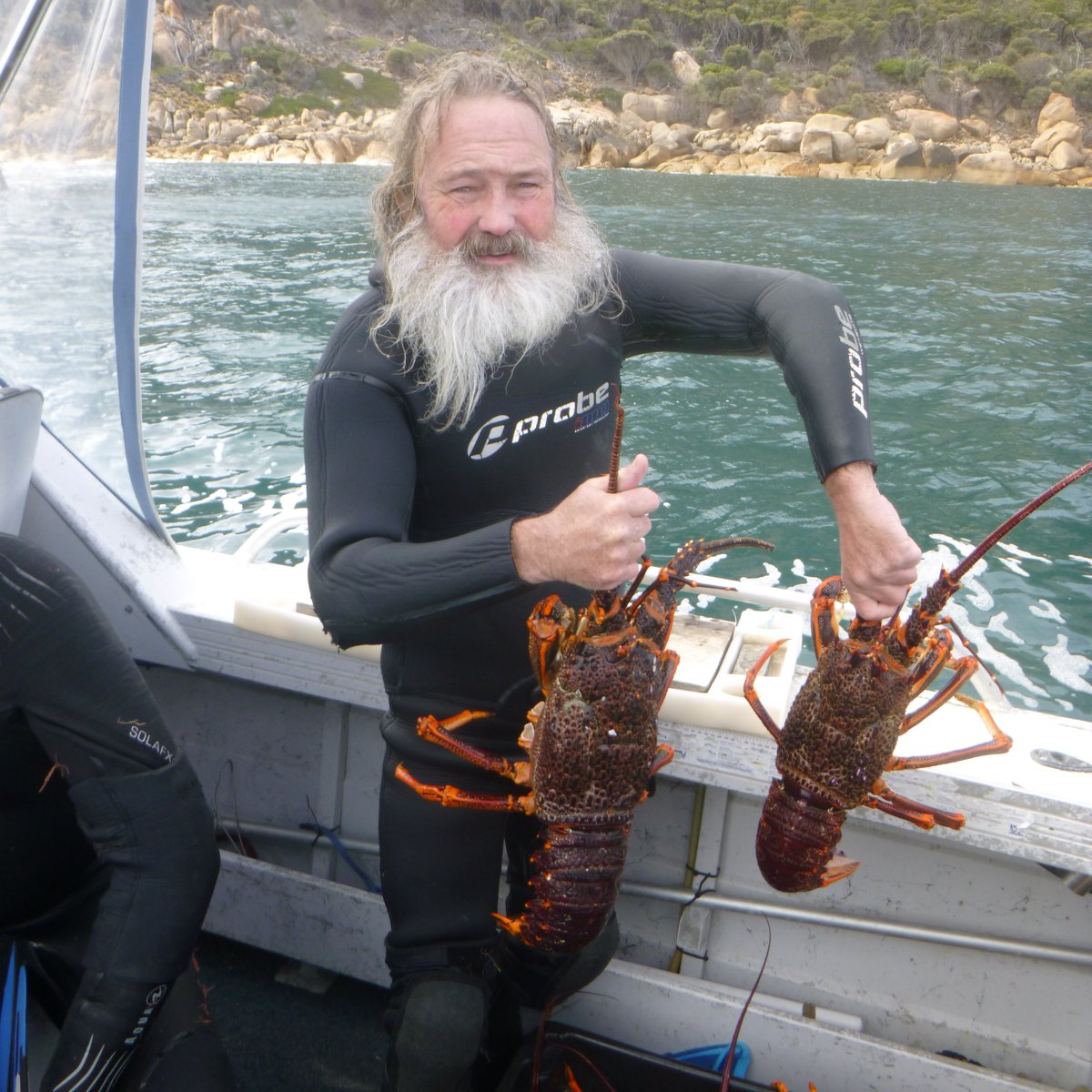
Dave Freer is the author of 25 novels. A finalist for two Dragon Awards, he won the Prometheus Award for Cloud-Castles and the LFS Special Award for Young Adult Fiction for Storm-Dragon. Originally an ichthyologist (a fish scientist), he turned to writing because “author” is easier to spell. He had an excellent training for science fiction from modelling fisheries. It also taught him how strange biology is and how little he knew.
He’s an ambulance volunteer, which gives him the role models for heroes. He’s been diving and rock-climbing for most of his life. He’s still alive, meaning he’s either very lucky or good at it. He lives on a remote island in the middle of the Bass Strait, Australia, where he puts his ideas on self-sufficiency into practice. It provides many disasters to write about.
Why I write books for boys
Why did I venture into writing books for boys? Well, after 23 books, winning the Prometheus, selling more than a million copies… I thought I was up for a harder challenge. I’ve never been one to resist those. It may be beyond me: a tough audience, very high standards and expectations — more than in writing for adults. The audience, frankly, gets bored far quicker, doesn’t allow the short-cuts of common knowledge to skim things, but won’t put up with turgid, tedious explanations. They also expect far more of you: to understand how they think. They won’t put up with being lectured to, they don’t accept their ‘place’ in the system. It’s a tough gig, and there will be better people than me doing it, but at the moment there seems to be a shortage, and I will keep striving to do it better.
I was one of those boys, once. Books, some books in particular, gave me a route through that chaotic part of my life. Gave me a base to build on. Sometimes, too, it gave me a refuge. Boys need heroes to help them form their own ideals. Our entire evolutionary history is shaped by the need for young boys to become men. Men take on problems and solve them. If they can’t see it first hand, let them do so in their mind’s eye. Such books seem harder to find now, and I thought I’d try solving that problem.
Reading will shape them — not by lecturing or just role models. It builds their vocabulary, and that is the Lego blocks of thought. If you only have a few, there’s not much you can build. Words on paper too force the brain to do something vital to creative and inventive thought in a way that video does not. They force the reader to translate incomplete information, to take a decision based on the context (what does ‘wear’ mean? Clothes? Or a machine part that’s suffering from too much friction?), to create images in their heads on the basis of squiggles that are nothing like those images, to accept and reject a lot of possibilities. Also, to climb inside the minds and feelings of others… that’s pretty special, and I believe worth making happen.
— Dave Freer