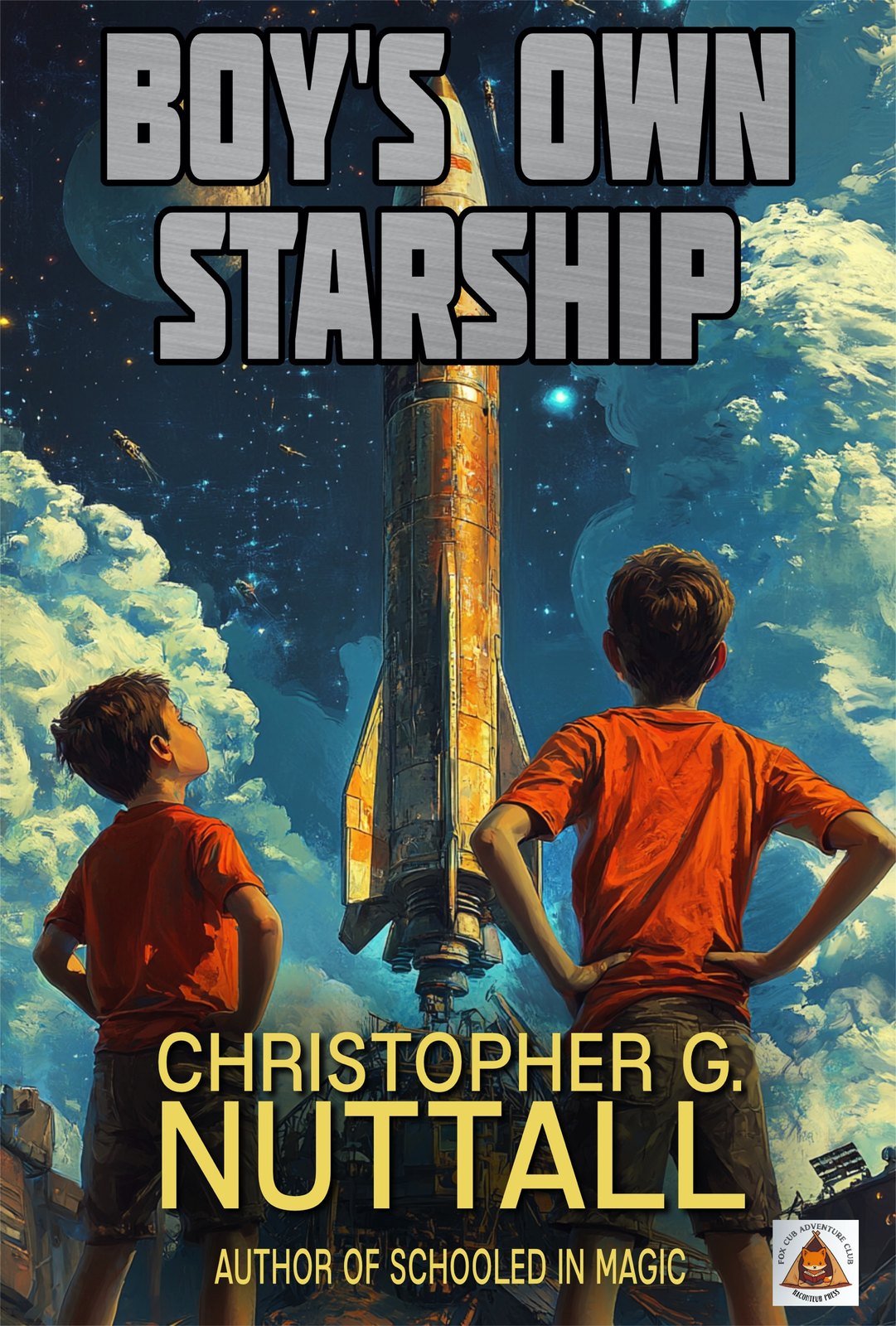
A fast, funny, dangerous debut for boys who’d rather launch into the unknown than wait to grow up.
Eric and John have a plan. It involves two condemned freighters, their combined trust fund, and the fine print of a permission slip their older sister signed without reading. Their plan is to rebuild one ship from the wreckage of two and see if the galaxy has any use for a pair of teenagers with piloting licences and more confidence than common sense.
It does. The galaxy has contracts, con artists, distress calls, drifting liners, and at least one well-dressed butler with a grudge. The siblings will make mistakes, cost themselves money, and occasionally save lives they weren’t planning to save. They’ll learn that there’s no such thing as a free lunch, that doing the right thing and getting paid for it are two different events, and that anyone who treats the household staff badly is asking for trouble.
Boy’s Own Starship is Book 1 of the Boys Own Starship Series — classic juvenile adventure for boys who want heroes that earn it.
Suggested reading age: 8–18
A taste of the book
The Dream (opening)
Eric and John are teenage brothers whose parents vanished in an interstellar accident years earlier, leaving them with money but no direction. Eric has a plan: pool their trust funds, buy two junked “Century Hawk” freighters from a scrapyard, and rebuild one working ship between them. His more cautious brother thinks he’s crazy. He’s probably right.
The Scrapyard
The brothers fly out to a starship scrapyard to inspect the two derelict freighters: one for the pilot, one for the engineer. The moment Eric sees the wrecked Century Hawks, he knows. Ugly as sin, and somehow beautiful anyway. Before the ship can even fly, it needs a licensed inspector’s sign-off, and the book takes that seriously.
For parents & teachers
No romance, no crude language anywhere in the book (the author leaves swearing out rather than spelling it out). The brothers argue, check each other’s judgment, and stay loyal throughout. Readers see real problem-solving: component lists, budgets, licensing, not magic fixes. Nothing is handed to them, and every shortcut costs them something later.