Category: Books & Authors

  • Meet C. M. Craig!

    Meet C. M. Craig!

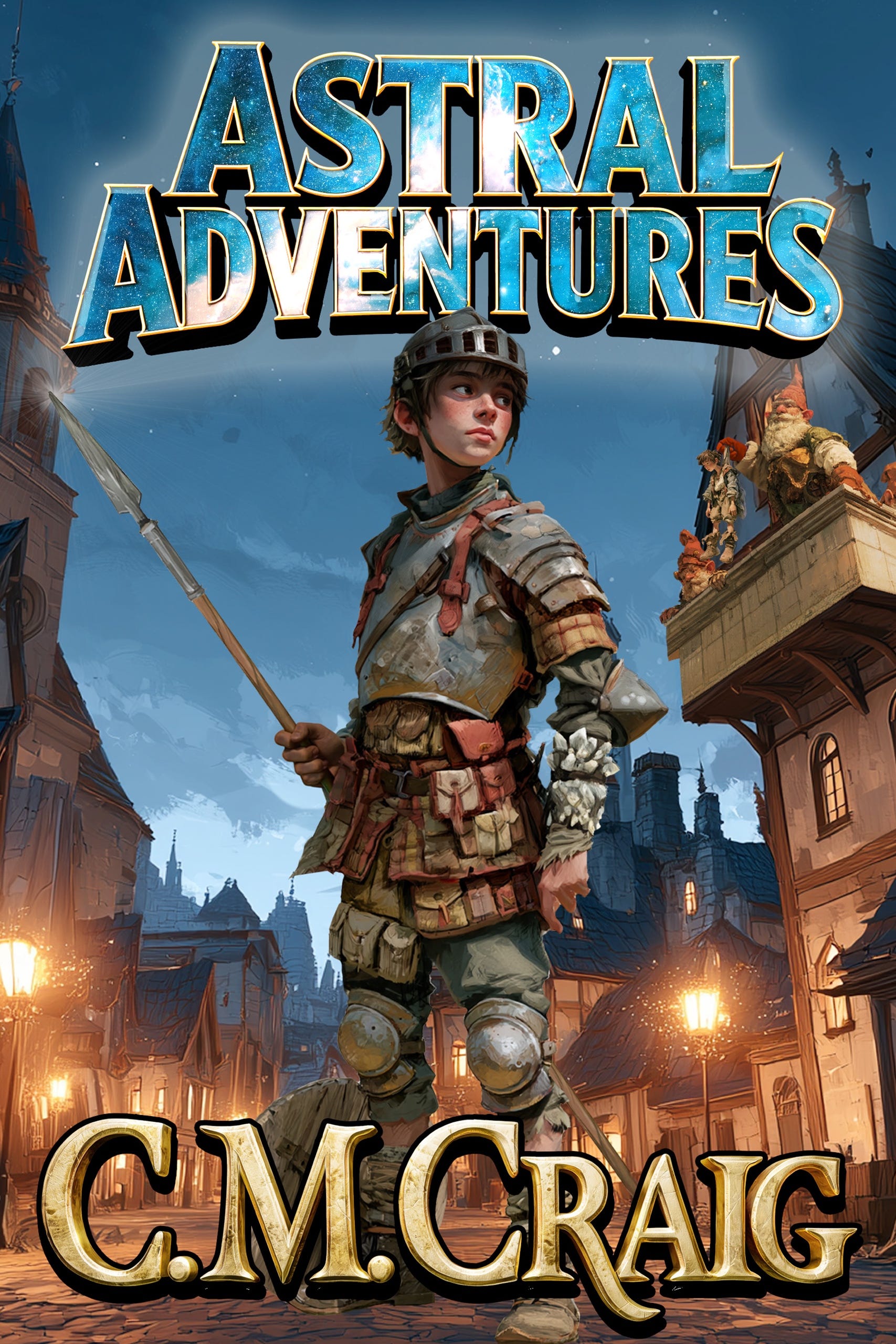
    Hey folks! Come on in. We’ve got someone we’d like you to meet. C. M. Craig is the author of Astral Adventures, a Valor Books adventure from Raconteur Press. We thought we’d tell you a bit about his story, and about him…
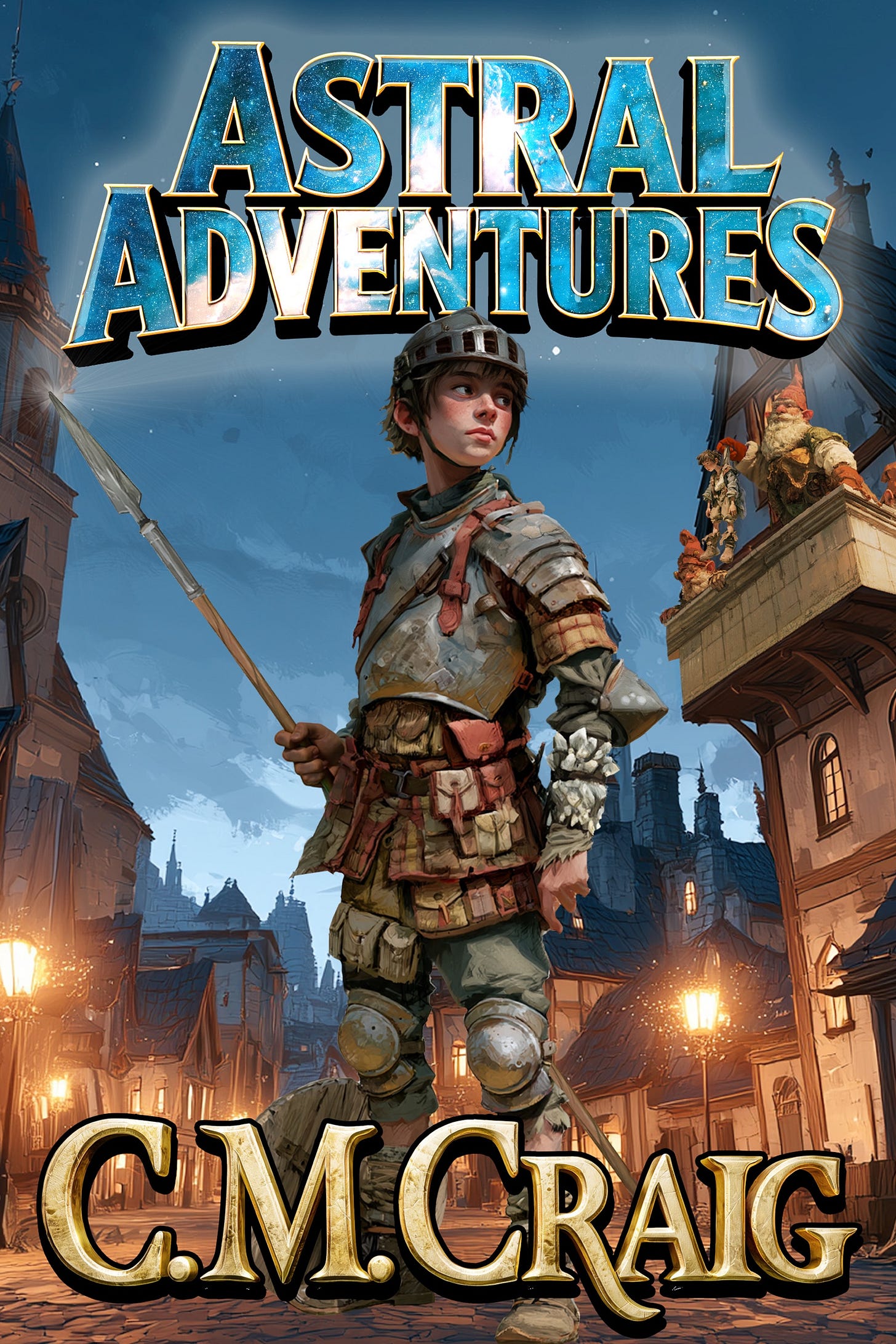
    Rob Falcon is fourteen, the only midshipman aboard a pirate-hunting warship, and about three seconds from being eaten by a jelly slime. He blows it up instead. The explosion tears a hole between worlds and dumps him on a beach where the trees come up to his chest and the locals are nine inches tall.

    Will Foster is one of those locals. He’s twelve, he lives in a tent, and the whole island blames his dead parents for the tidal wave that flattened the town. He’s also the only one who bothers to check whether the giant washed up in the surf is still breathing.

    Rob needs a signal strong enough to reach his ship. Will needs off this rock. Neither of them counted on gnomes with pickaxes, a hundred-foot ten-year-old, or a pirate captain who already knows Will’s name.
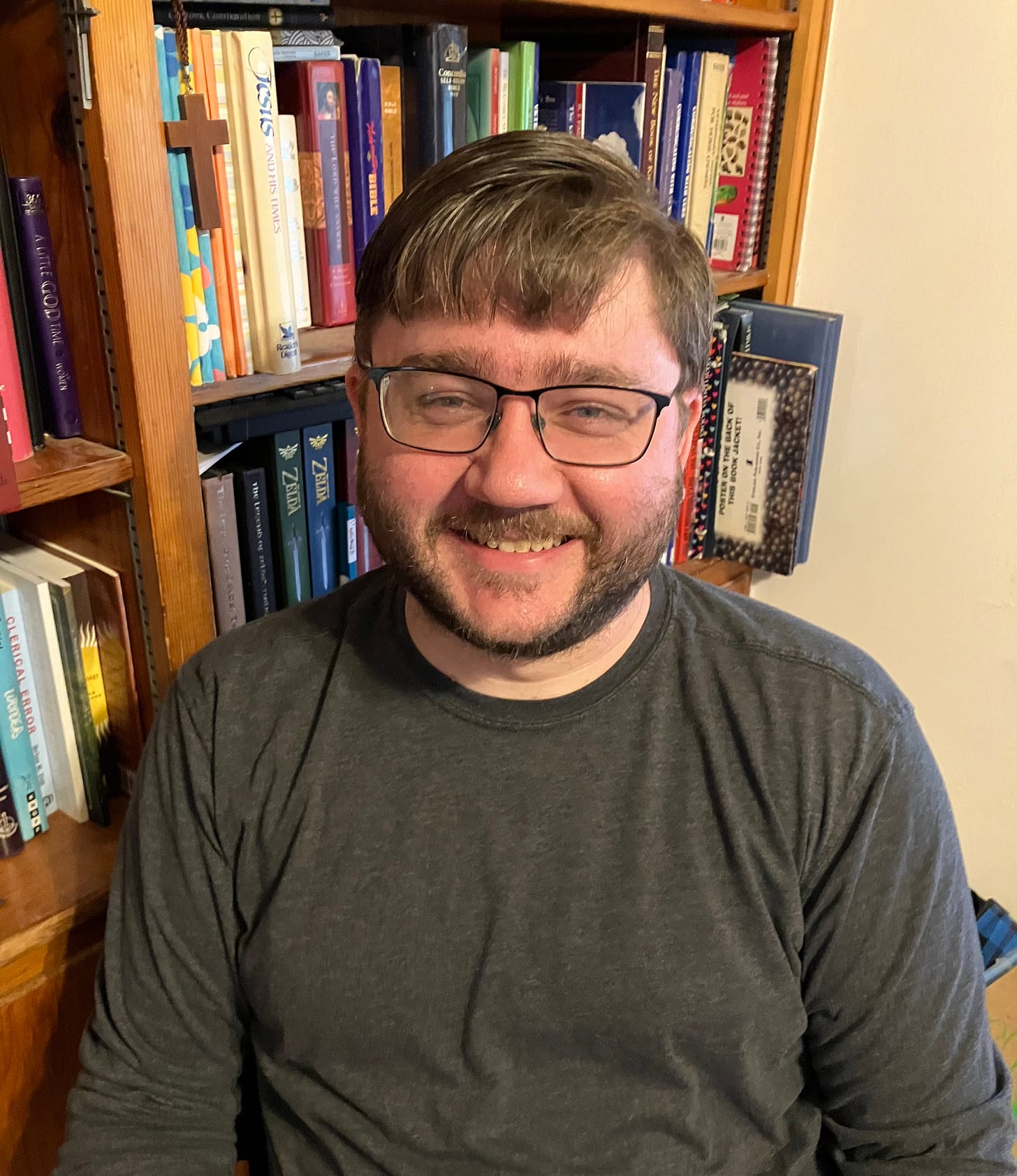
    C. M. Craig was one of those kids you occasionally had to poke in order to get his attention. His daydreams were just way more interesting than whatever was going on around him. Fast forward a bit, and he’s now realized that real life is every bit as interesting, just without as many special effects. Now, he is a Lutheran Pastor who occasionally has enough free time to write stories, living out next to the middle of nowhere in Kansas with his wife, daughters, three horses, dog, dragon, and fish.

    It took a while to get there, though. Growing up in Michigan. Going to college in Wisconsin on the shores of Lake Michigan. Spending summers out in California working at a Lutheran Summer Camp. Going to seminary in Indiana. Doing Campus Ministry work on his internship and meeting his future wife. Getting the Call out to Kansas and finally bribing his wife to marry him by showing her the pasture out back for her horses.

    During almost that entire time, he has been writing in one way or another. Recently, people have begun to want to actually read what he writes, which is an incredibly humbling and exciting development. In his spare time, he enjoys hanging out with his family, watching anime, reading, playing video games, bowling with his wife, and, in general, loving and living the amazing life God has blessed him with.


    Excellent! Tell us: who inspires you?

    Tolkien, C. S. Lewis, Jim Butcher, Brandon Sanderson, David Weber, J. K. Rowling, and many, many others. Not to mention, of course, God, my wife, and daughters.

    What themes or questions does Astral Adventures explore?

    Family is always a strong theme in almost any of my stories. In Astral Adventures, we start by exploring what it feels like to have your parents taken from you, trying to survive on your own, and realizing that you can’t, that everyone needs help. Some people will try to take advantage of that, but there are good ones out there who will step up and help, and those are the ones you should trust and rely on.

    What did you draw direct inspiration from?

    Astral Adventures is essentially the basic plot of Gulliver’s Travels, happening in the setting of Treasure Planet, with characters and special effects from Dungeons and Dragons. It is designed to feel like the late 1800s, a time period when it isn’t inconceivable that an old school sailor, a ninja, a cowboy, and a Victorian gentleman adventurer could all meet up. But with plasma pistols and magic, because why not?

    How did you come up with the core concept?

    I mashed up a couple of my favorite ideas and characters. Treasure Planet, in particular, has always had a special place in my heart, especially its setting. Will’s story is the real heart of this one, though, and that’s the simple concept of a boy who’s lost his parents finding them again, which I thought the world might need a bit more of right now.

    When did the idea first hit you?

    I’ve always been interested in playing around with the sizes of characters and how that affects their relationship, personalities, and so on. However, this particular expression of that came from someone who gave me a prompt online, wanting me to do something similar to Gulliver’s Travels. So, I added that to the simmering pot, and Astral Adventures came out.

    What element of this story are you most proud of?

    I really think I nailed the climactic moment well. This is the first time that I knew where I wanted it to go, plotted it out, and then successfully executed what I was trying to do. Hearing my beta readers react in the way I wanted them to was very gratifying.


    If you’re as interested in Astral Adventures as we are, you can follow C. M. Craig on his Amazon Author Page. While you’re there, make sure to check out some of the short stories he’s written for anthologies like Crashed Landings and Giant Squeeing Robots!

    First published on the Raconteur Press Substack, October 20, 2026.
  • A Wobble-What?

    A Wobble-What?

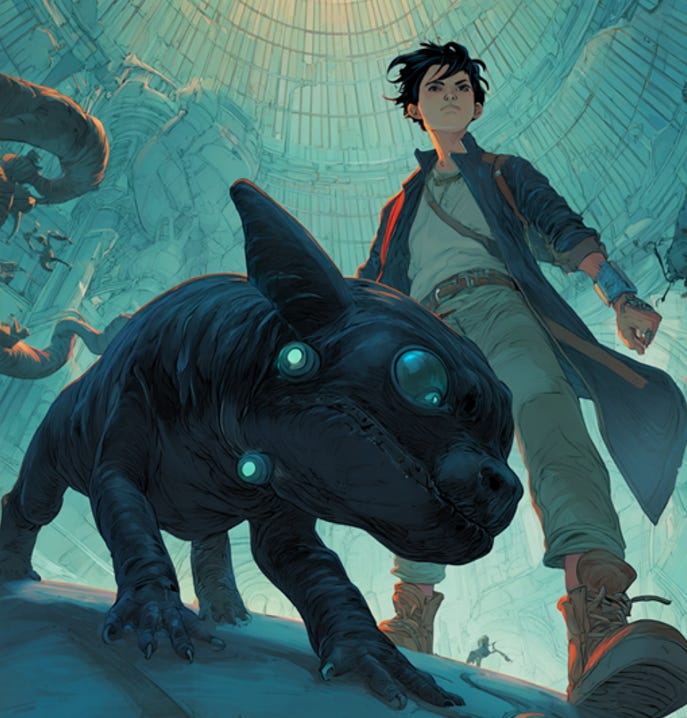
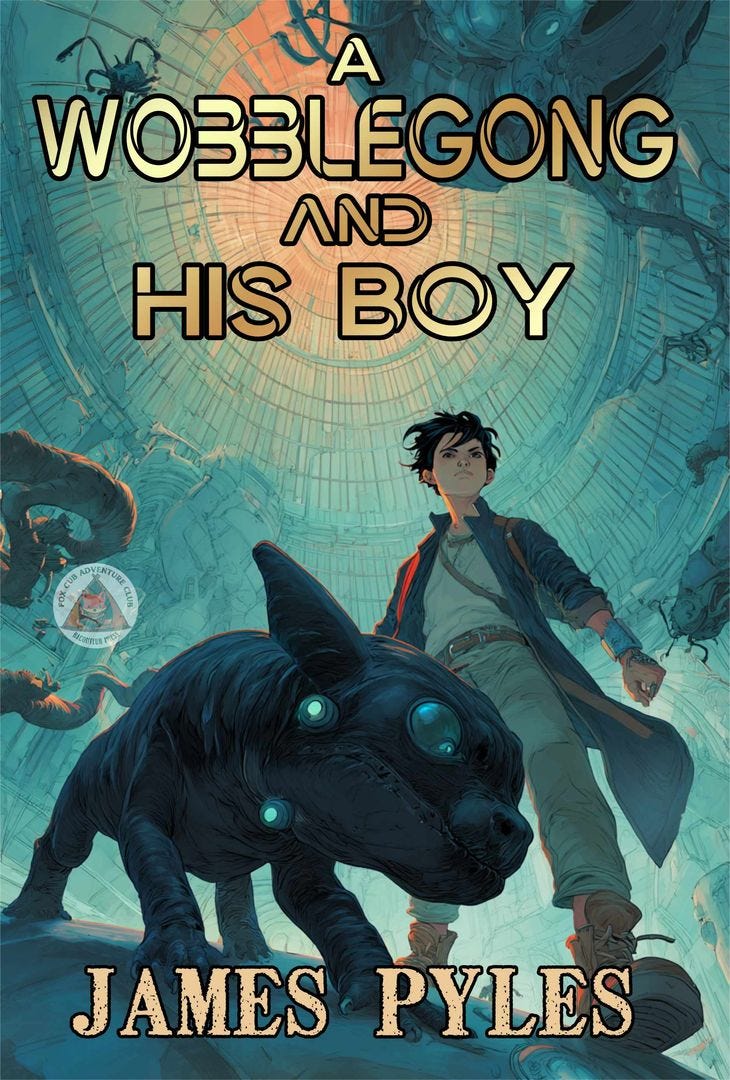
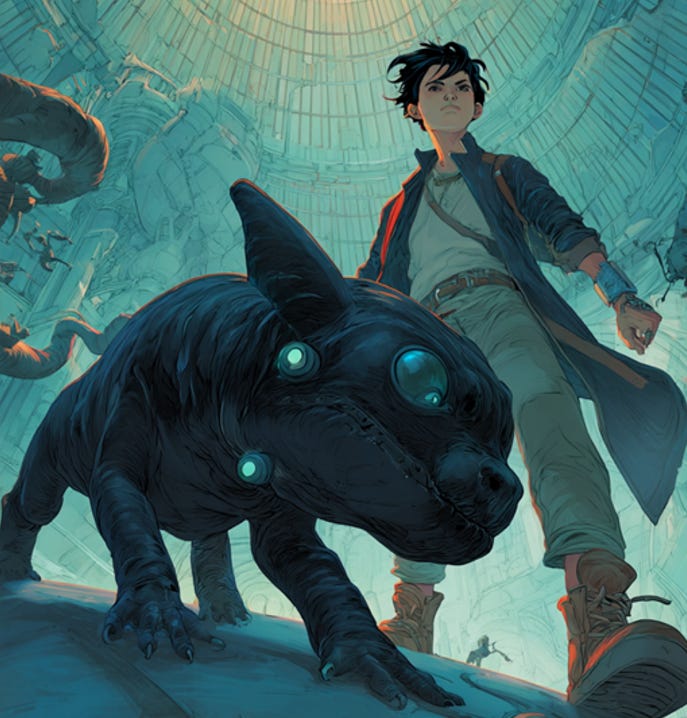
    Author James Pyles talks about the scientific inspirations behind his boys’ adventure sci/fi book, A Wobblegong and His Boy. How might one go about genetically designing a boy’s best friend exactly?


    What is a Wobblegong?

    That’s one of the most common questions I get whenever someone asks about my book A Wobblegong and His Boy.

    The answer requires a bit of history.

    Once I get an idea, it’s hard for me to let it go. Once I create a universe, I tend to write short stories that all occur in that same universe. Those short stories accepted for publication end up in various anthologies put out by a number of different presses.

    And so it is with a world that has the technology of synthetic DNA.

    A number of years ago, I was having a quiet discussion with a friend of mine over coffee. He and I were of a similar age (sadly, he has since passed away), both loved science fiction, and shared a lot of cultural experiences. One of them was the TV show “The Six Million Dollar Man” starring Lee Majors.

    Even having read the source material, the novel Cyborg by Martin Caidin, I was never convinced that a bionic person would be able to do all of the things the character Steve Austin did on series. The breaking point in any chain is its weakest link which in this case would be the interface between bionic hardware and a flesh and blood human body.

    But what would happen if you took your very injured and almost dead person and instead of rebuilding them with nuclear powered limbs and artificial sensory apparatus, you reconstructed them literally from the ground up mimicking their own genetic code with a synthetic substance? Use thousands or tens of thousands of nano-bots guided by a sophisticated AI to take burned and scarred tissue and seamlessly reform it into its original configuration. In some ways, it would be like a highly advanced form of 3D printing.

    But putting a person back together so they were as good as their original self would just be the starting point. What if you could weave in augmentations, improve their senses, strengthen bones, muscles, and nerve tissue, and give them abilities no human had previously possessed? Why, you could adapt a human being to live and even thrive in any number of alien environments. People who could comfortably walk naked on the surface of Mars or swim in the atmosphere of Venus.

    The latter idea became my short story “The Colonists” published in the anthology Spring Into SciFi 2020 by Cloaked Press. And thereby hangs my tale regarding Wobblegong.

    It’s not abundantly clear in my novel, mainly because I didn’t want it to distract from the main action, but Remmie and his colony, any colony of humans on an alien planet really, are adapted using the above-mentioned technology to live naturally on an alien exo-planet.

    I’ve read a lot of articles about the discovery of “Earth-like” exo-planets in our general “neighborhood” of the galaxy, but when those planets are described, they have perhaps five times the mass of Earth, circle a red dwarf star, or have other significant dissimilarities to our own world and solar system.

    In other words, unlike the “M-class planets” in Star Trek, it’s very unlikely that you could just drop off a bunch of people on a planet’s surface and have them experience no difficulties with the atmosphere and gravity, be able to eat the native planets and animals, and otherwise live just as they would on Earth.

    Terraforming is an option, but adapting an entire planet to suit the needs of people would take a very long time, perhaps centuries. Instead, what if we adapted human beings to the environment so that when they woke up from their reconstruction creches after so many months, the air, gravity, possibly radiation, anything they would encounter would seem perfectly natural and normal to them?

    That’s what happened to Remmie and his friends and family and the rest of the colonists in my book.

    Except something went wrong with the guiding AI SADI thanks to an unanticipated major solar event. The reconstruction wasn’t complete for everyone except a small group of children and teens. If the other colonists were removed prematurely from those creches, they would be unlikely to survive and if they did, it wouldn’t be for long.

    That’s the source of Remmie’s desperation in getting to and repairing SADI.

    Now what about Wobblegong?

    I originally had the idea of recombining the DNA of a variety of animals, livestock and pets, into a new and alien creature. However, one of the properties that can be used with synthetic DNA is the ability to allow the subject to control their adaptations once they’ve been reconstructed. Taken to the extreme, the subject life form could continuously alter their appearance and abilities to whatever situation it encountered.

    Wobblegong started out “life” using the basis of animal DNA from a wide variety of samples but then kept going until it could change almost instantly from a four legs to six, or adapt from a land animal to one that flies or even a water-breather.

    When I picture Wobble, I remember those times as a kid when I was playing with iron filings and a magnet, making the filings change shape and orientation. Now imagine that happening to a living being with shapes and abilities being created and recreated on a whim.

    That’s Wobblegong.

    In my book, I leave it open as to how much of Wobble’s creation was pure accident and how much of it was guided. The story requires thirteen-year-old Remmie to fix a highly complex AI, but even the smartest kid in the world (or worlds) is still a kid.

    Near the beginning of the novel, Remmie and his friends are able to “consult” with crewmember Alexander Whitner while he is still in his reconstruction creche. Whitner can communicate enough to provide Remmie with repair instructions which he records on an old-school USB drive. I hint that Whitner may also have influenced the creation of Wobble which Remmie will need to help him not only repair SADI, but after that, to solve a much bigger problem threatening the existence of their entire world.

    I’m not going to drop too many spoilers, but the problem with SADI and successfully reconstructing the rest of the colonists is only the beginning. I didn’t want the book to be just another straightforward story of survival and innovation. Remmie needs Wobblegong to help him discover, understand, and then repair something that has gone fundamentally wrong with everything he considers reality.

    Sound interesting? It does to me, too.

    A Wobblegong And His Boy may be written for boys from ages eight to eighteen, but it’s really an exciting science fiction adventure that anyone can enjoy and it operates on a lot more levels than you might think.

    Plus it’s a lot of fun.

    -James


    HOW COOL IS THAT? CHECK OUT A WOBBLEGONG AND HIS BOY!


    First published on the Raconteur Press Substack, September 23, 2026.
  • Accidental Adventuring!

    Accidental Adventuring!

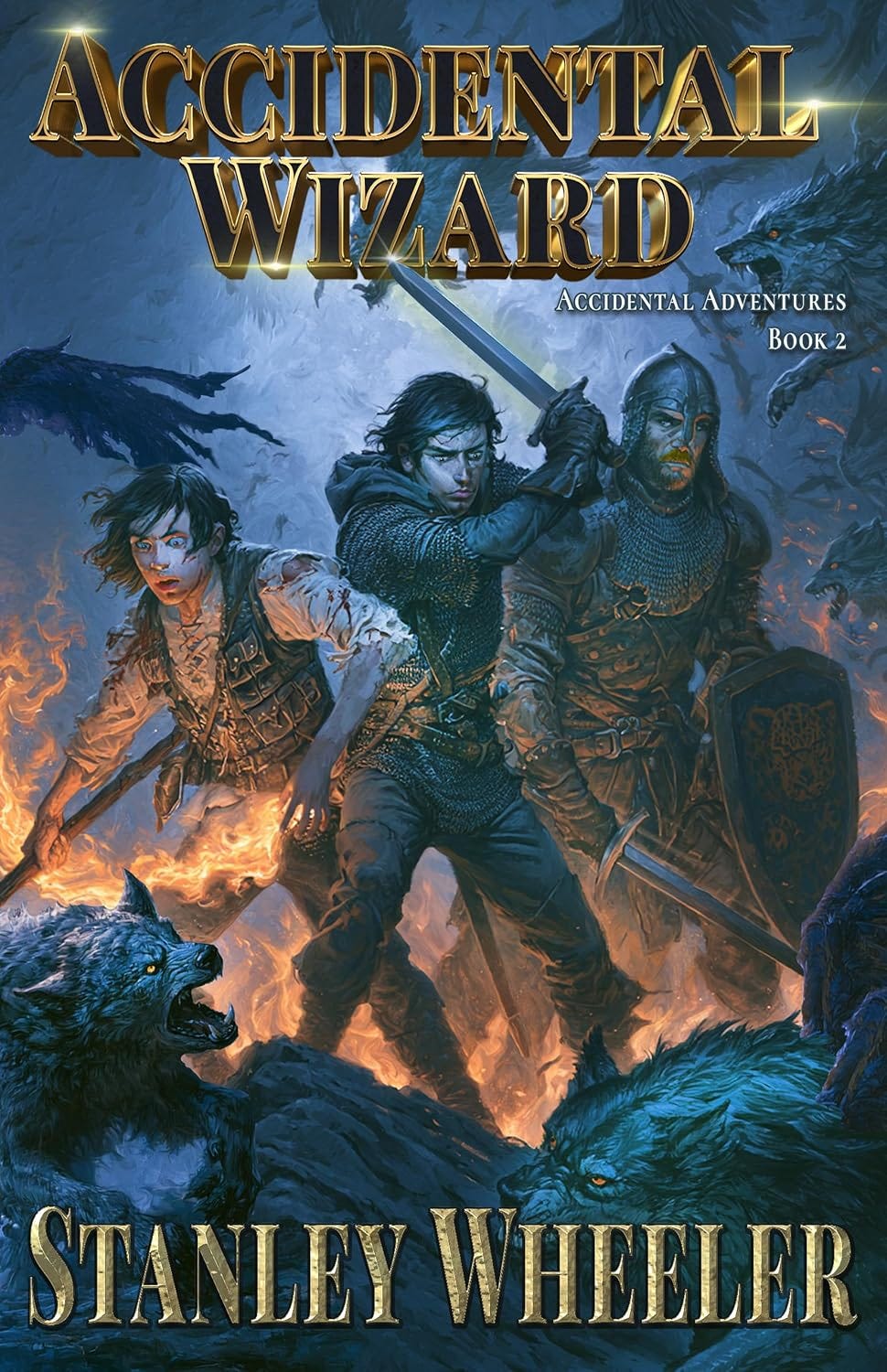
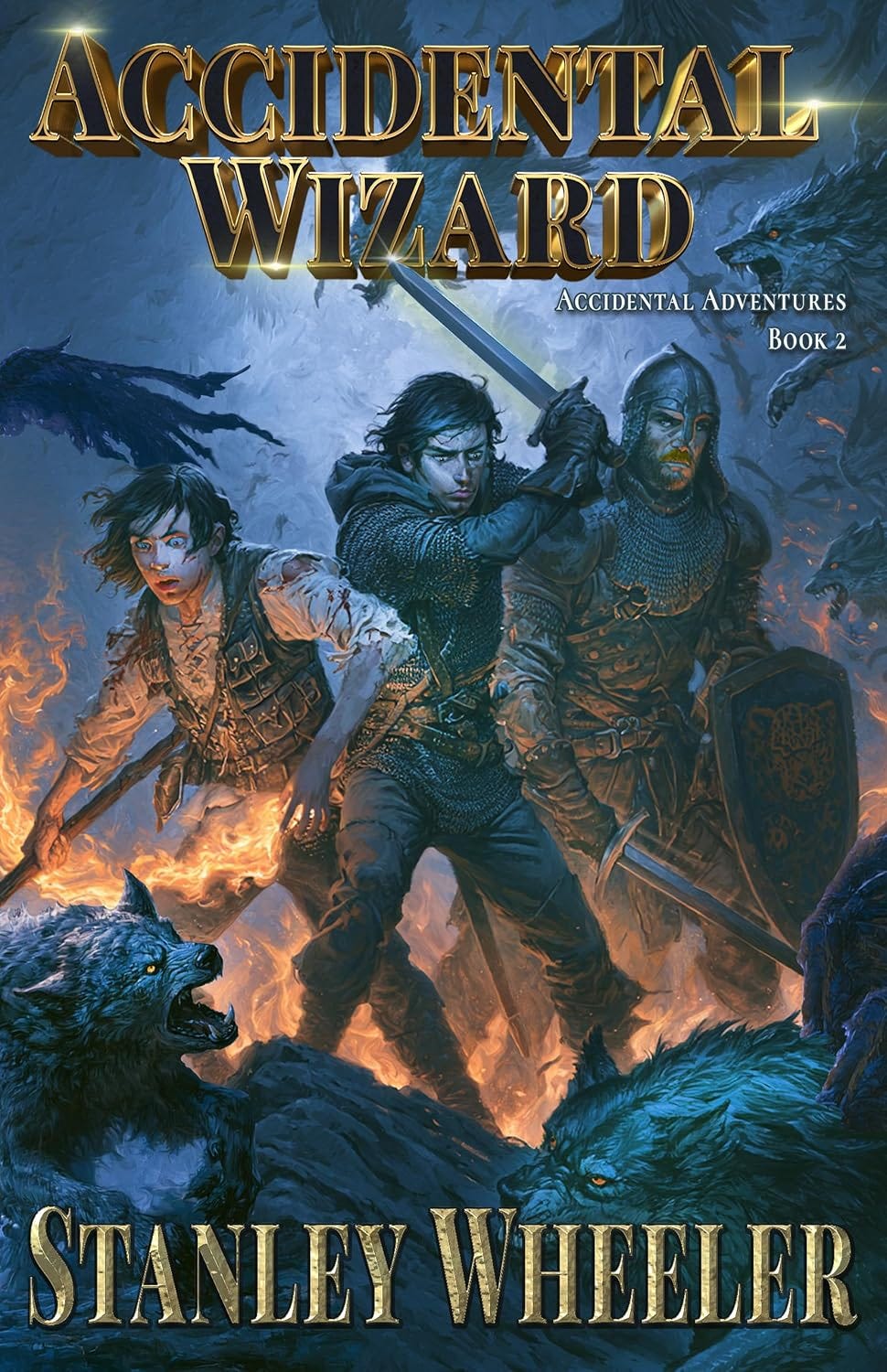
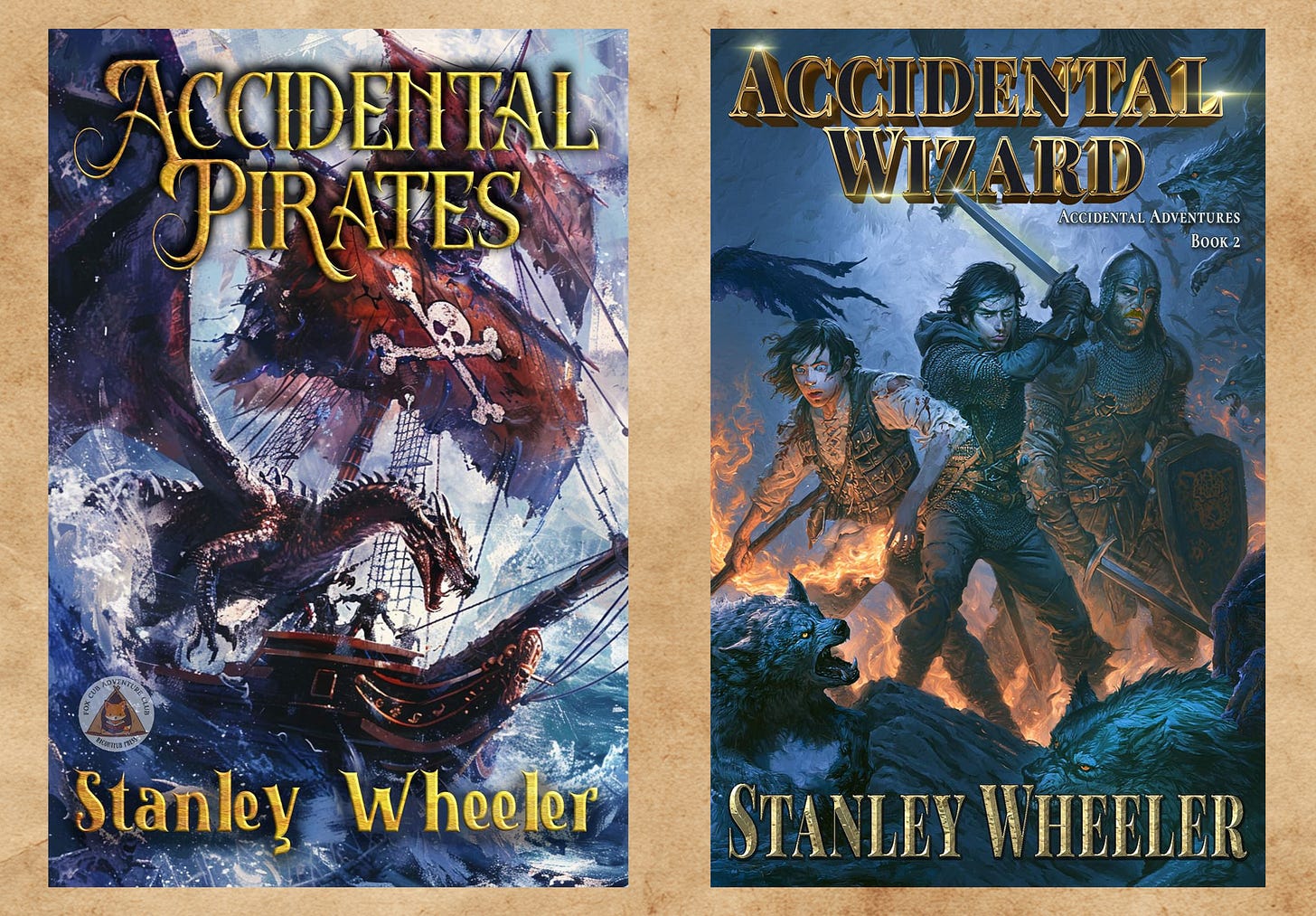
    Book 2 of Stan Wheeler’s Accidental Adventures boys’ adventure series released this month! Let’s take a look at that action!

    Two brothers. One dead wizard. And a spell nobody warned them about.

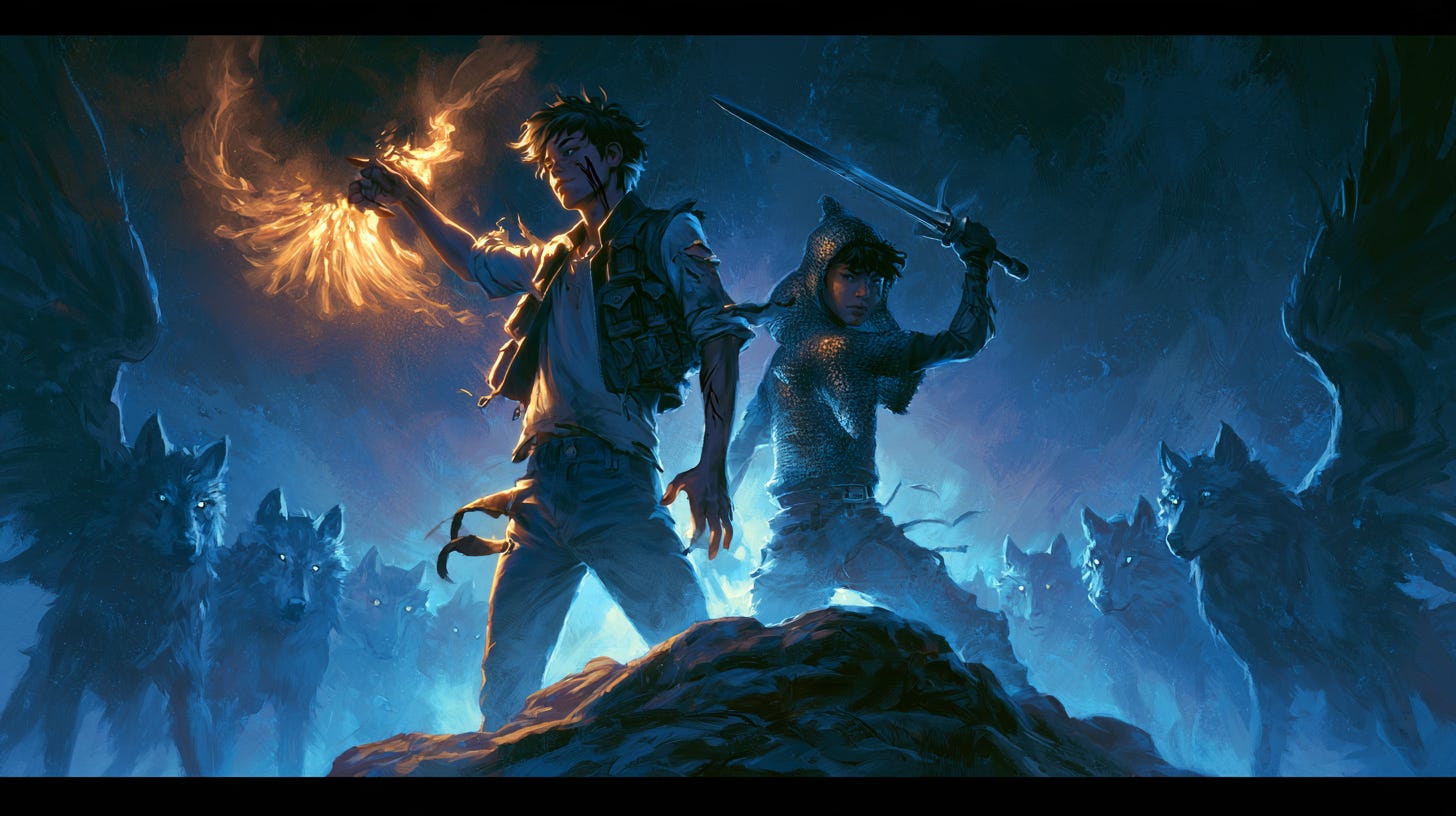
    Twins Chris and Kenny only meant to walk through the giant fallen log at the end of Grandpa’s trail. Instead, the world explodes into fire and thunder, and they crash-land in a medieval kingdom on the losing side of a war. A dying blood mage summoned them on purpose, and now Chris is expected to take his place.

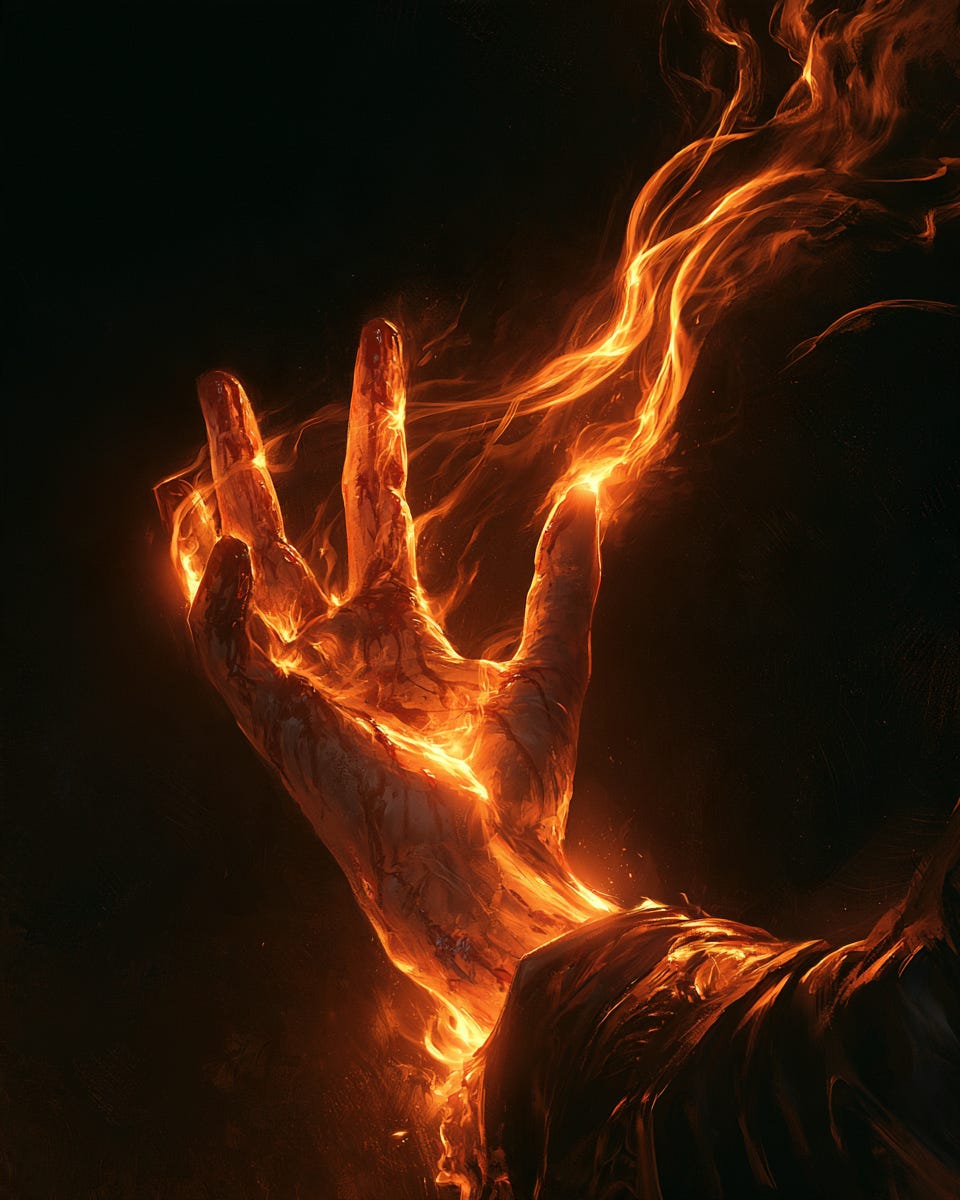
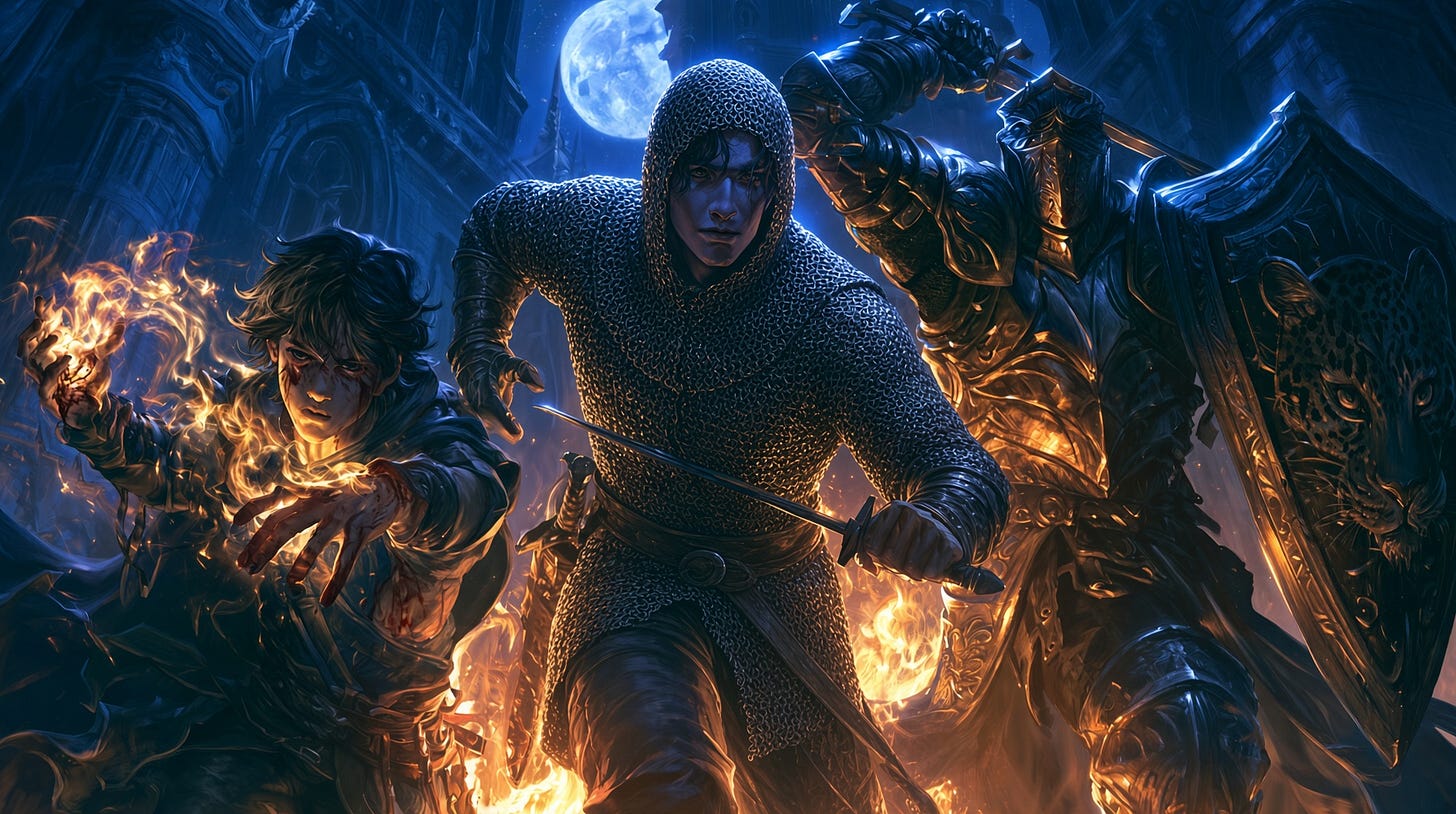
    There’s just one catch. In this world, magic is paid for in blood. Every spell Chris casts — fingers of fire, a flick that stuns, a stone that breaks locks — opens a fresh wound. They call it the mulct, and the bigger the magic, the bigger the price. Meanwhile Kenny is handed an enchanted sword and mail shirt and told he’s a knight now. Ready or not.

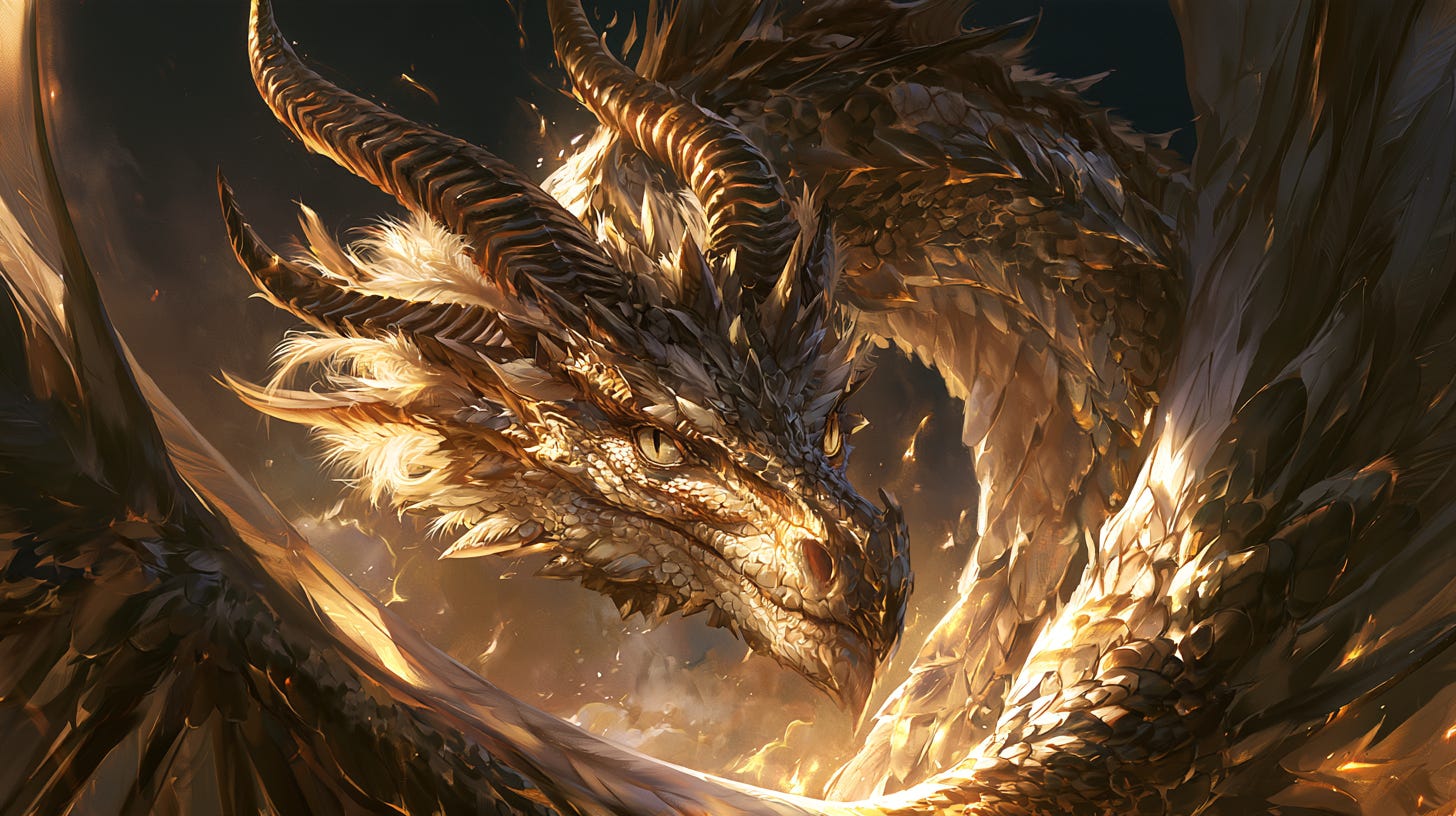
    To get home — and to stop a dragon-sorceress whose army is already crossing the Wide Waste — the boys have to find a staff sealed inside a mountain since Merlin’s day. Between them and the prize: flying blood wolves that hunt mages by scent, a valley of shape-shifting trolls, a traitor on a war-wolf, and a one-eyed pirate they were sure they’d already blown up.


    I snapped the thumb and middle finger of my wounded hand. “Fire!” I yelled, throwing my hand toward the chandelier. A sheet of fire appeared beyond my fingers, speeding with a whoosh across the chandelier, melting two inches off every candle.

    The wings came forward, feathered tips down, touched before her face, and parted again like a curtain. The mouth remained closed, but we heard a voice; a feminine whisper spoke to our minds: “Look upon your doom!”

    I had no shield or sword. I reacted with the only weapon that came to mind, snapping my fingers and shooting a fan of flame at the streak of flying fur and fangs.

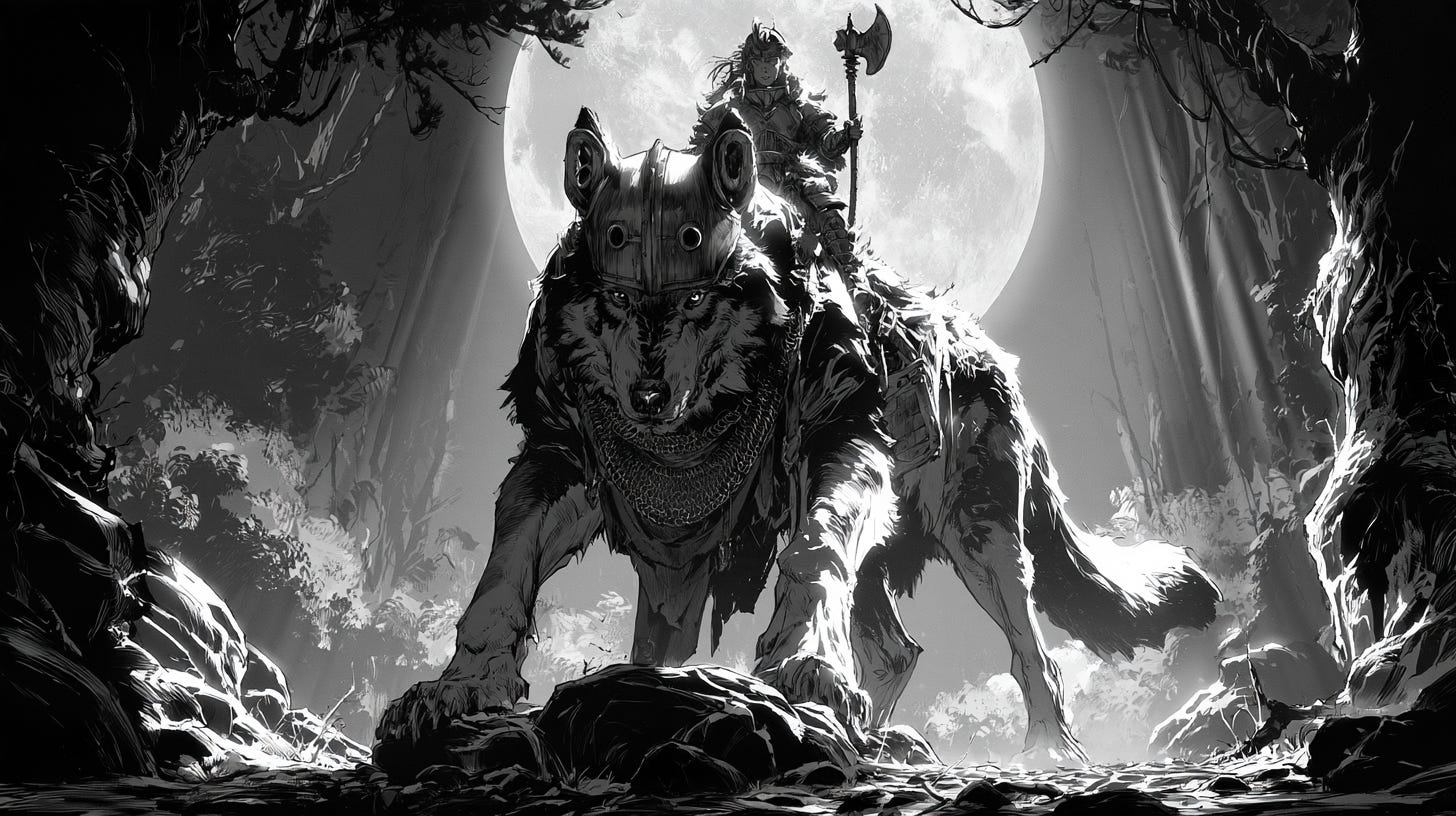
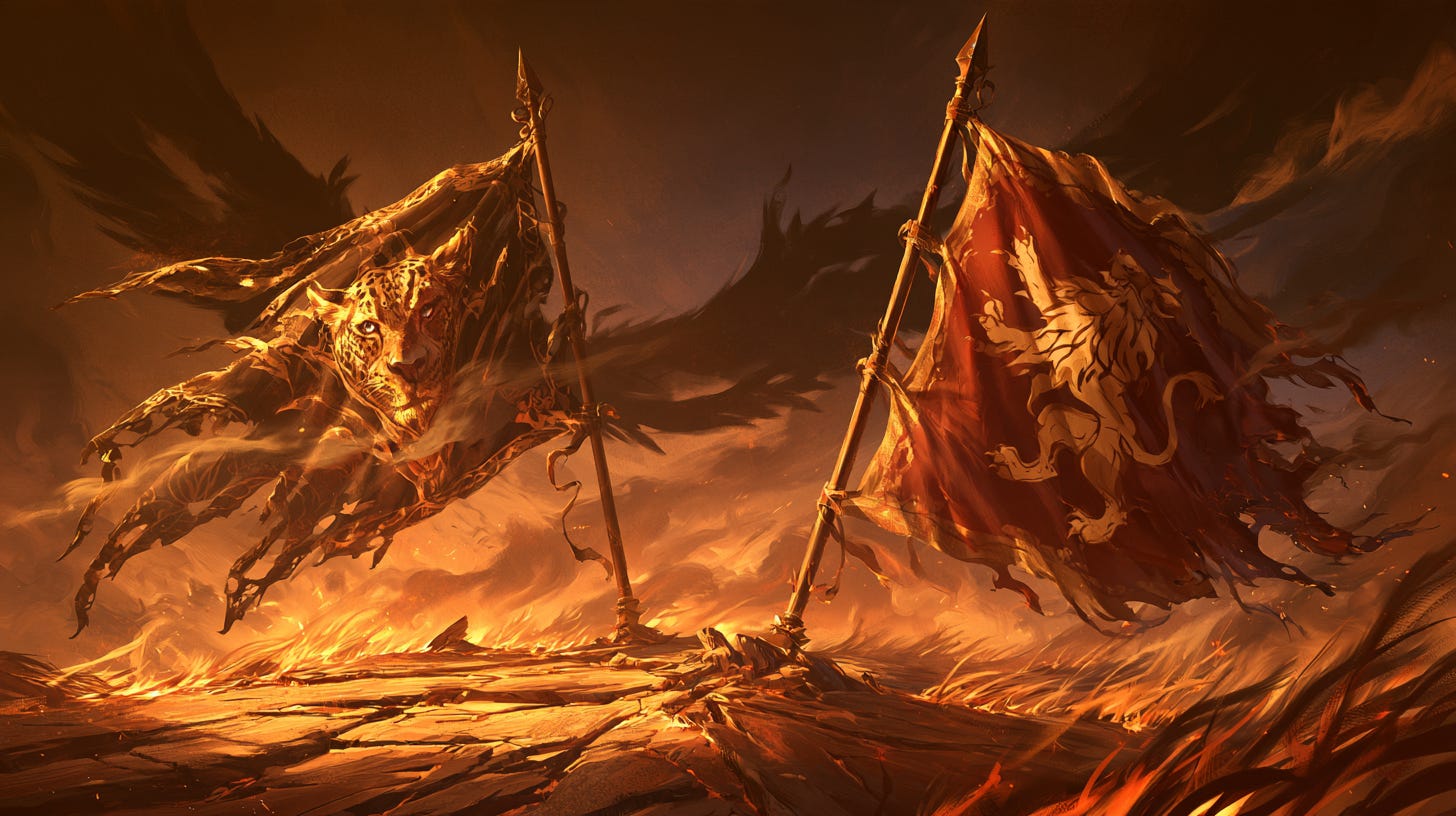
    A metal helm with holes for the ears guarded Badda’s snout and head. A net of chainmail glistened in the moonlight, protecting the wolf’s neck. Otho wore a mail shirt and coif. Over the shirt, a tunic of gray bore a red lion standing on its hind legs with his forepaws clawing the air. Otho carried a war axe in one hand.

    “Welcome, again,” Brand said. “This is Duke Leofwine, whose hospitality you enjoy, and this is King Dunstan, our former enemy now become our ally.”

    “Stay close together. Don’t get separated. They can overwhelm and take down any one of us by ourselves… A man alone is dead. Separated, we are three dead men.”

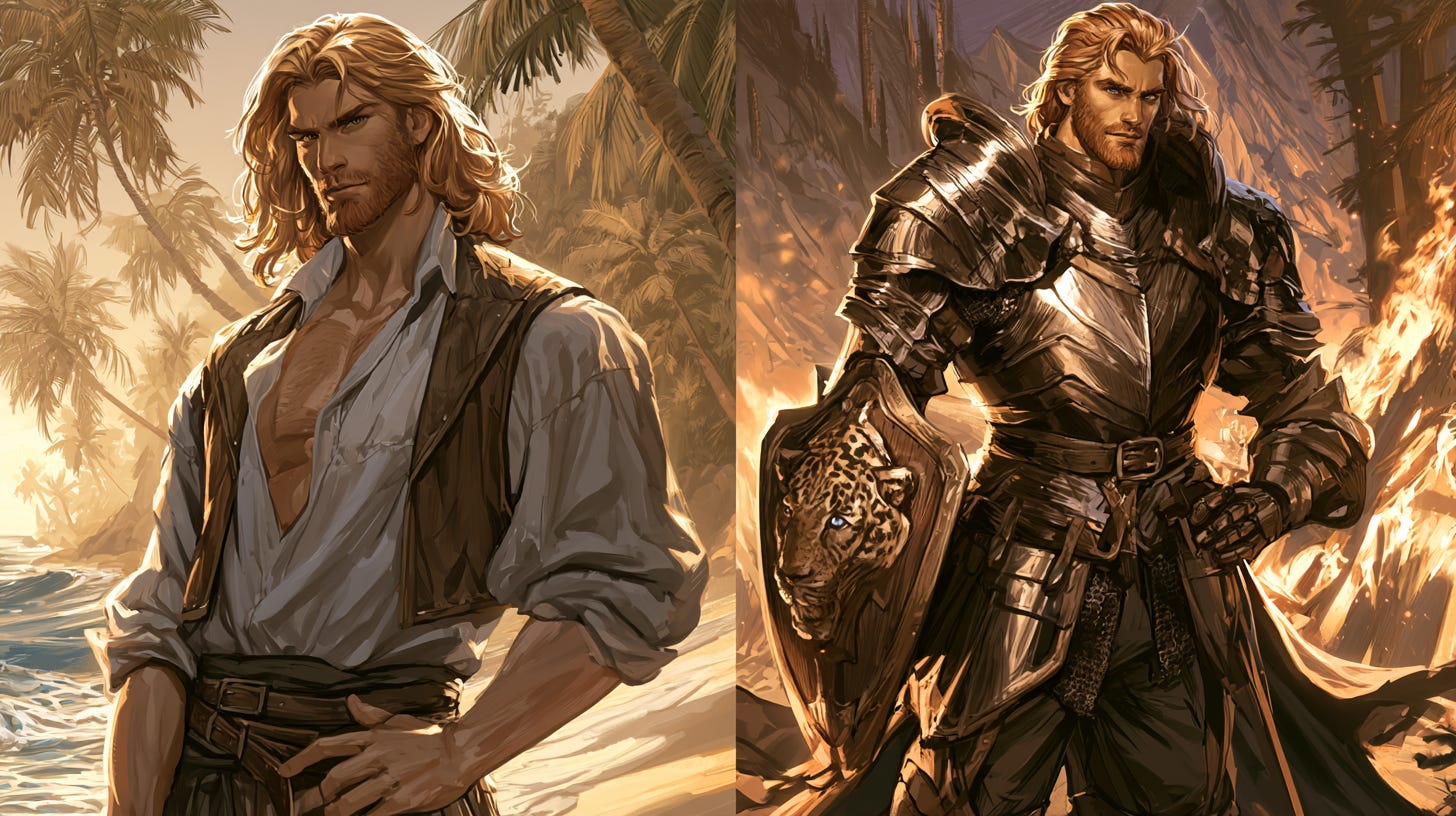
    …a younger man with long blond hair and a reddish beard. He wore a loose, gray shirt and a brown vest. His denim pants were ragged and torn above each ankle.

    …

    “Not the same boys? They’re a year older is all.”

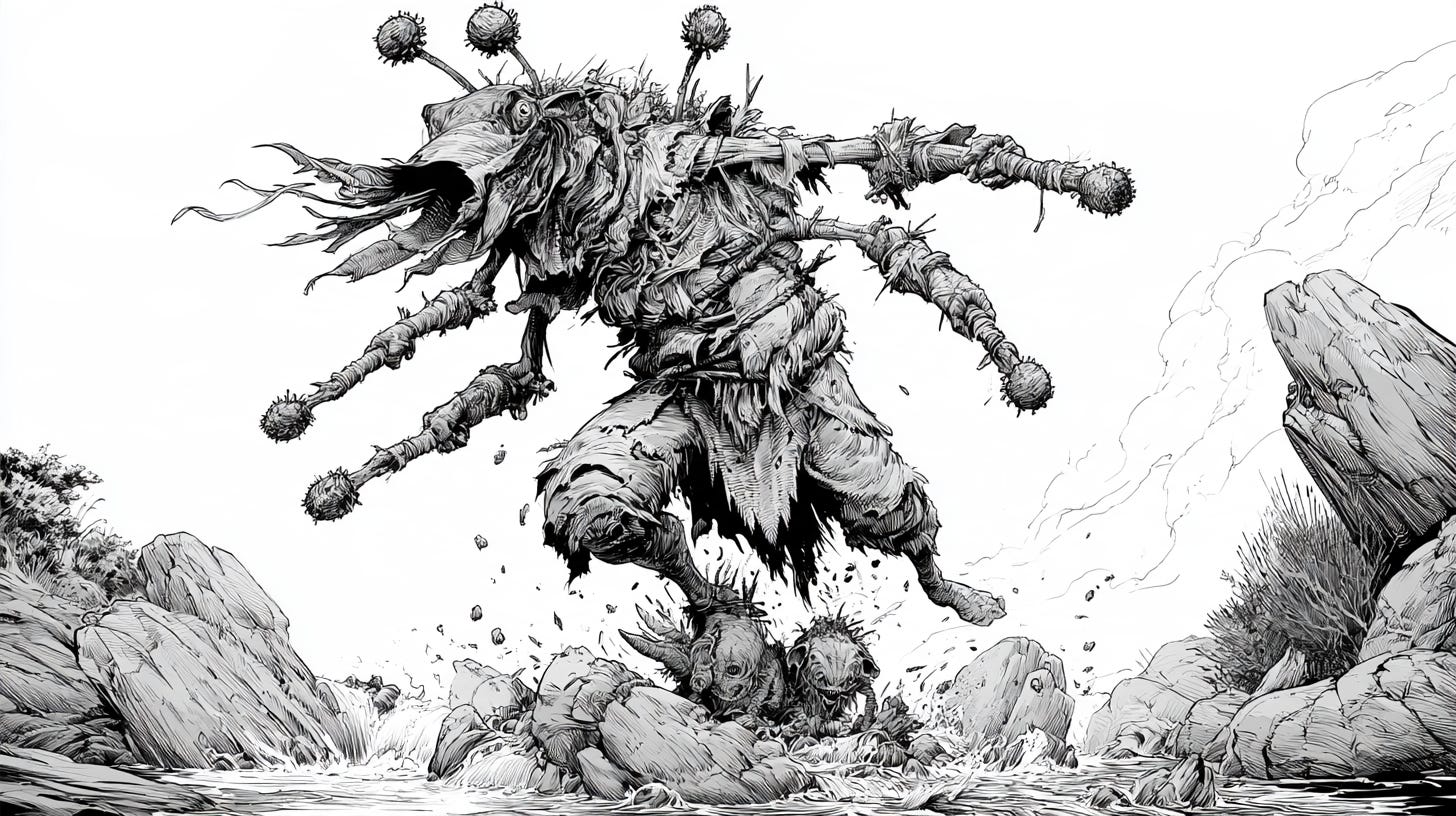
    It flopped upward like some bizarre robot assembling before us. It grew to three feet, then six. Finally, six short arms held knobbed club, and the thing leaned and teetered back and forth like a drunken sailor.


    Two brothers. One wrong turn. A different world every time.

    Chris and Kenny go looking for adventure with their grandpa, and they keep finding the kind that shoots back.

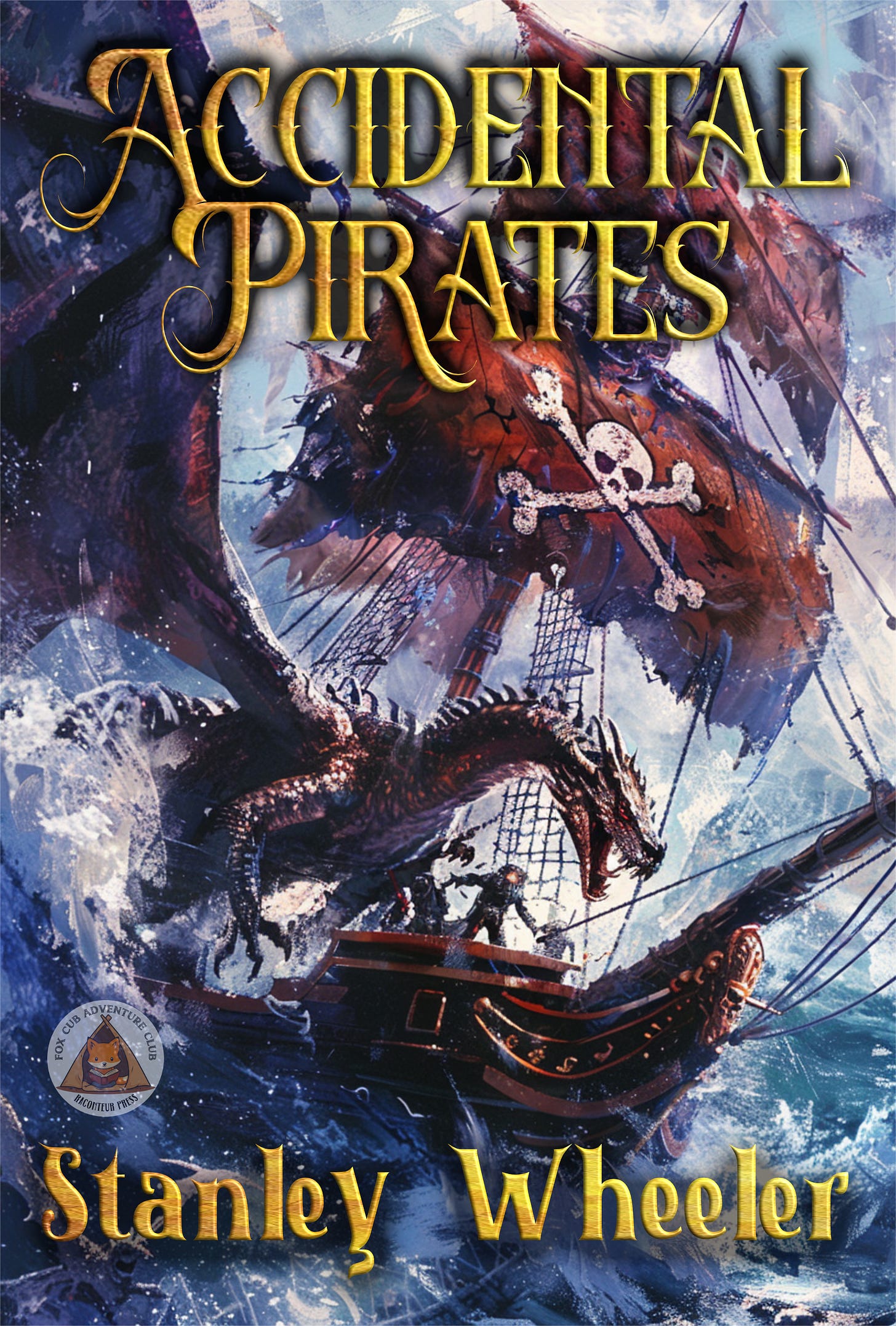
    A crack in a cave wall drops them into a Caribbean that never made the history books, where pirates sell boys like cargo and a green dragon burns ships to ash. A fallen log at the end of Grandpa’s trail throws them into a kingdom at war, where magic is paid for in blood and every spell Chris casts opens a wound in his own skin.

    No superpowers. No way to save and reload. Two pocketknives, whatever they can talk their way into, and each other.

    Every book in The Accidental Adventure series strands the twins somewhere new and takes away everything but their nerve. They load flintlocks. They climb burning rigging. They walk onto Dragon Island because the one thing that gets them home is sitting on it. And when Grandpa’s advice comes back to them, if you don’t feel brave then pretend you are, they do exactly that. The alternative is staying.

    Fast, funny, and genuinely dangerous, for readers 8 to 12 who would rather live a story than sit still for one.

    Start with Accidental Pirates. Bring snacks!


    First published on the Raconteur Press Substack, September 22, 2026.
  • Boy’s Own Starship Series

    Boy’s Own Starship Series

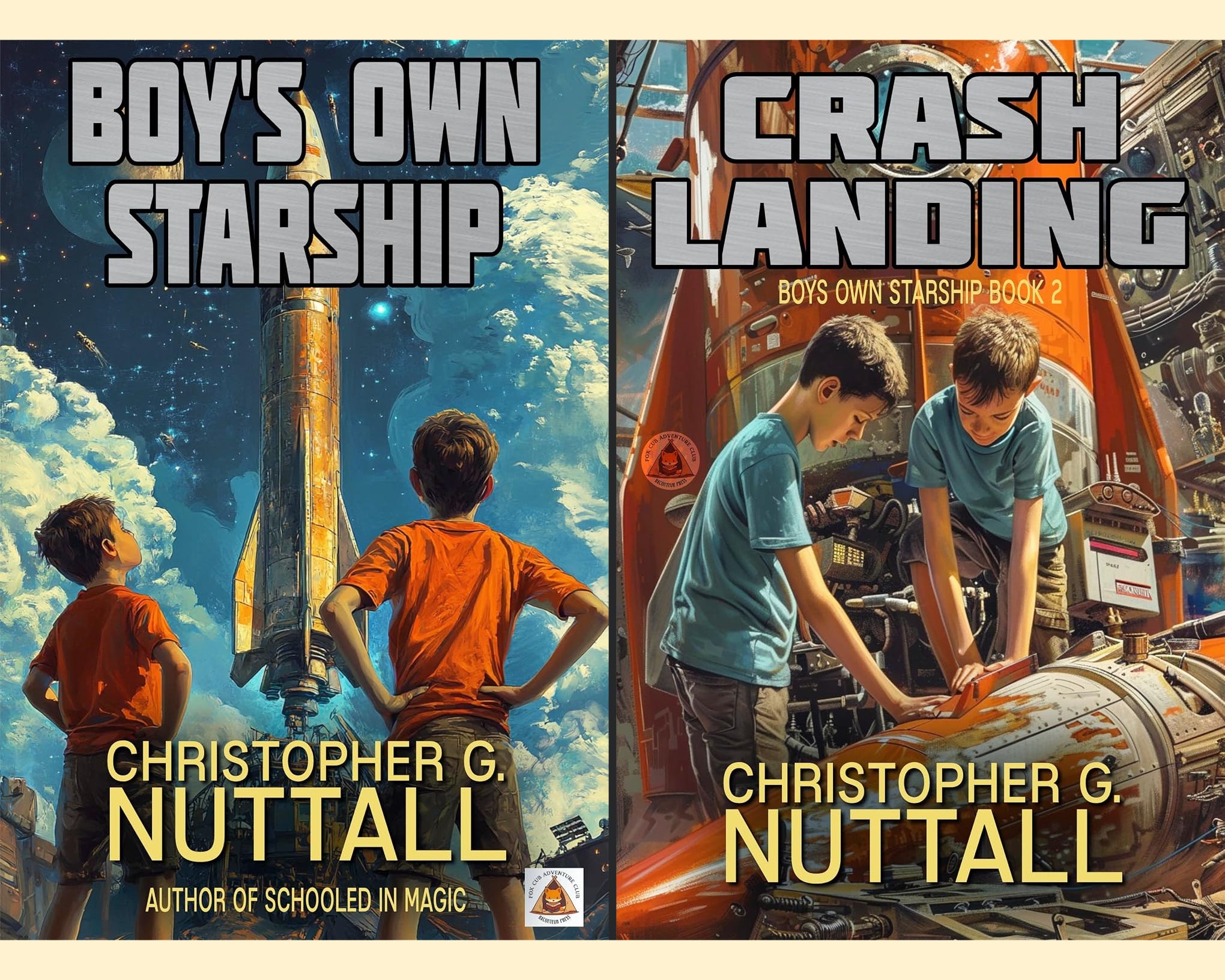
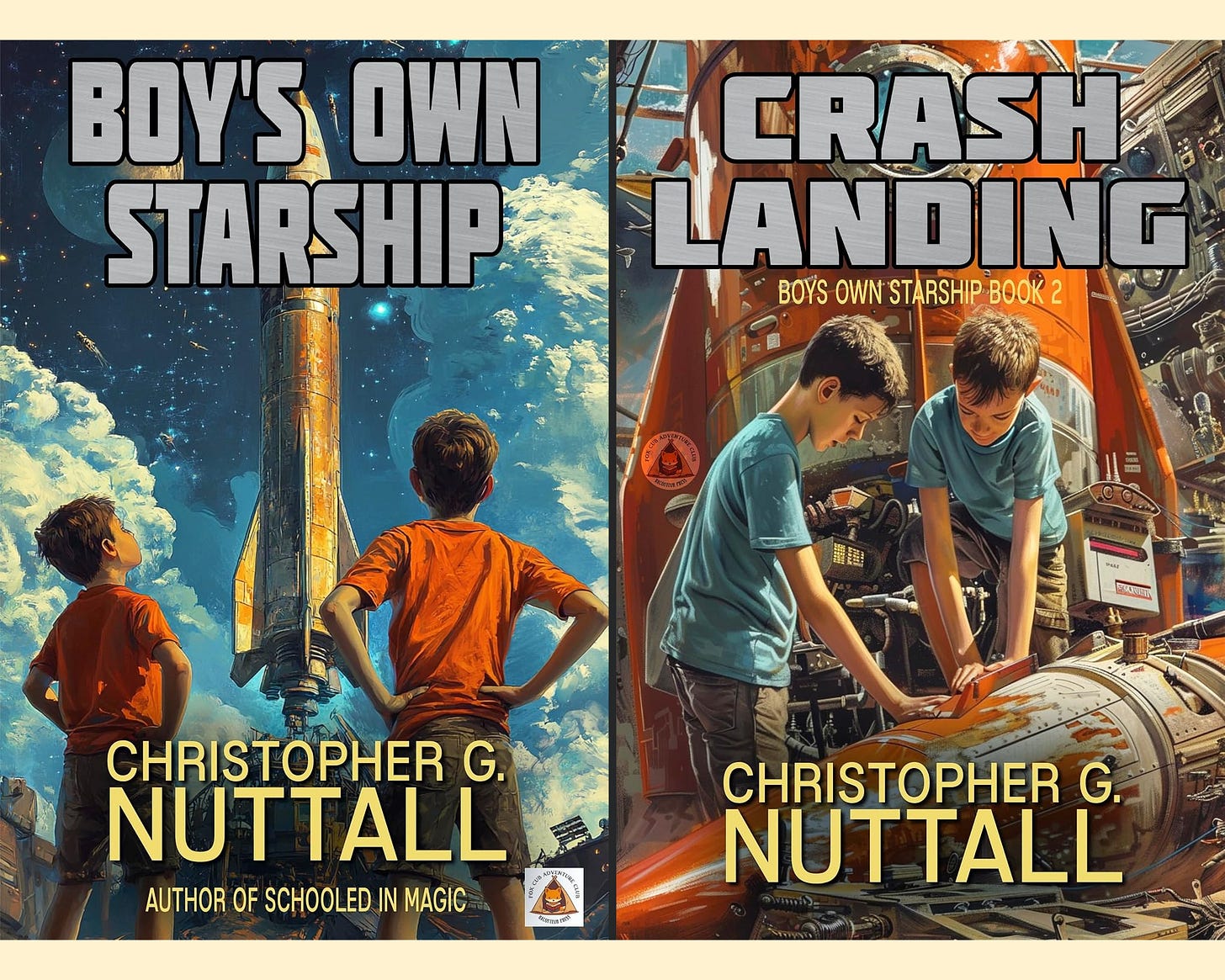
    There’s nothing like hitting the drive-in on a late summer night. It’s even better when it’s a Double Feature!

    We can’t quite deliver the whole too loud speaker, burned popcorn, jumbo soda, and ten minute wait at the concession shack (which was ok, ‘cause you could still see the movie) experience. What we can do is serve up a great Science Fiction Double Feature!


    Boy’s Own Starship Series

    Eric Crichton and his brother John thought they knew all about space: buy a beat-up old freighter, haul cargo from star to star, and stay one step ahead of the bankers. Easy, right?

    Book One: Boy’s Own Starship

    by Christopher G. Nuttall

    4.6 out of 5 stars (209) — 4.4 on Goodreads (114)

    Young brothers Eric and John, eager to break free from their earthbound lives, rebuild a starship from scrapped freighters. Joined by their reluctant sister Maryam as their guardian, they chase their missing parents’ legacy among the stars. It’s a dangerous galaxy out there, full of con artists, traitors, space pirates, and stranded space liners. The siblings work together to outsmart their enemies, save their ship, and achieve their dreams.

    Inspired by Heinlein’s Juvenile classics, this thrilling adventure weaves action, hard-earned lessons, and unbreakable family bonds. Will the crew of the Max Jones conquer the galaxy or return to Earth defeated? Join their exhilarating journey of courage and discovery!

    Book Two: Crash Landing

    by Christopher G. Nuttall

    4.6 out of 5 stars (118) — 4.4 on Goodreads (59)

    Eric Crichton and his brother John thought they knew all about space: buy a beat-up old freighter, haul cargo from star to star, and stay one step ahead of the bankers. Easy, right? But when a shady charter lands them a mysterious medical package bound for a newly terraformed world, things go from routine to red-alert in a hurry.

    A pirate ambush knocks the Max Jones out of the sky, stranding the young crew on a wild, storm-swept planet where the weather is only the second most dangerous thing. The “plague” they were supposed to deliver turns out to be a lie, the package hides something worth killing for, and the pirates want it back, along with the kids who carry it. With their sister Maryam fighting for her life in a stasis pod, Eric must team up with a tough colony girl named Daisy, a sharp-eyed heiress who won’t be left behind, and a handful of hard-working settlers who know how to handle trouble.

    They’ll need every trick they’ve got: quick thinking, faster hands, and the kind of stubborn courage that turns a crashed ship into a fighting chance. Outnumbered, outgunned, and running out of time, the young crew of Max Jones learns the hard truth: in space, no one’s going to come save you—you save yourself.

    A fast-moving tale of high adventure, daring escapes, and the unbreakable spirit of youth: straight from the Heinlein tradition of boys (and girls!) who face the unknown and come out on top.

    First published on the Raconteur Press Substack, August 12, 2026.
  • Dave Freer Responds to 2nd Prometheus Award

    Dave Freer Responds to 2nd Prometheus Award

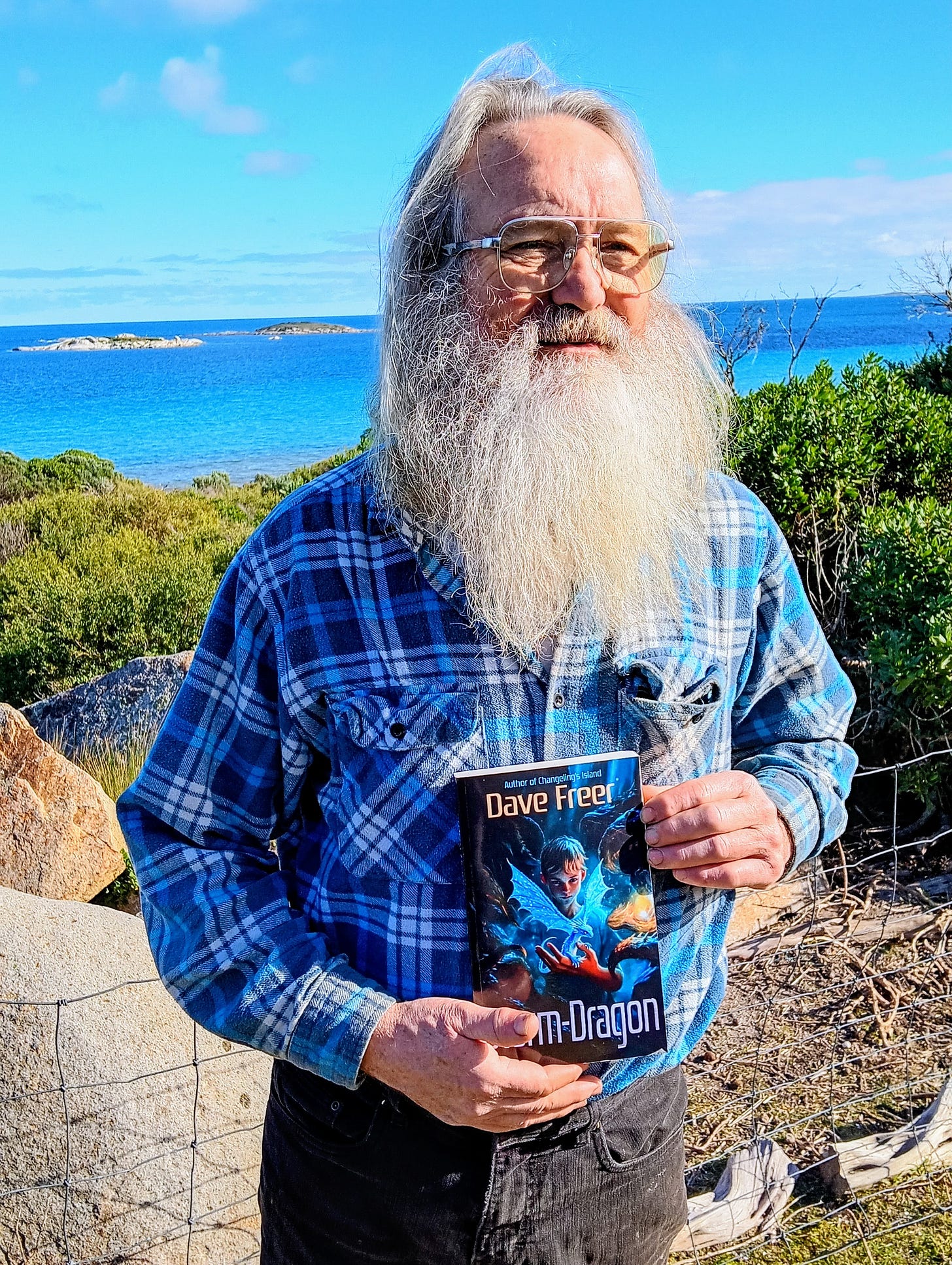
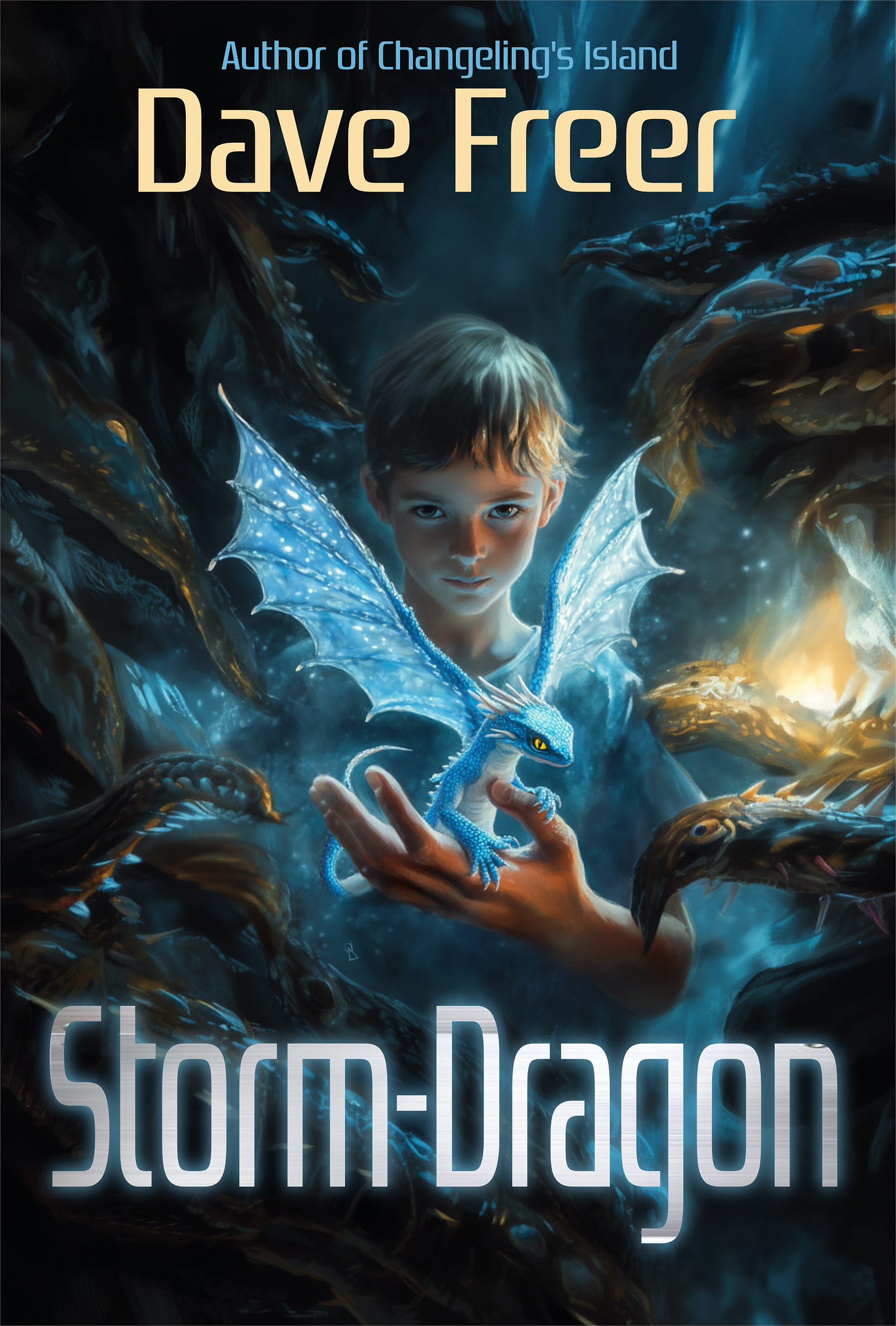
    Dave Freer is a two-time winner of the Libertarian Futurist Society’s Prometheus Award and author of Raconteur Press’s first-ever boys’ book, Storm-Dragon—now the first winner of the Special Prometheus Award for Young Adult Fiction, a category introduced in 2026.
    In addition to his work as an ichthyologist, Freer is an author of numerous books and short stories for both children and adults. He has edited two Raconteur Press anthologies, Mad Science! and Mad Science: Bits and Pieces.

    Freer’s Cloud-Castles won the Prometheus Award for Best Novel in 2023.

    We reached out, and these were his comments:

    “STORM-DRAGON is a classic case of knowing something was not a good idea (adult books usually sell better than YA), but doing it anyway, because it was something you believed needed doing, and somebody had to… and then finding out that maybe it was a good idea after all.

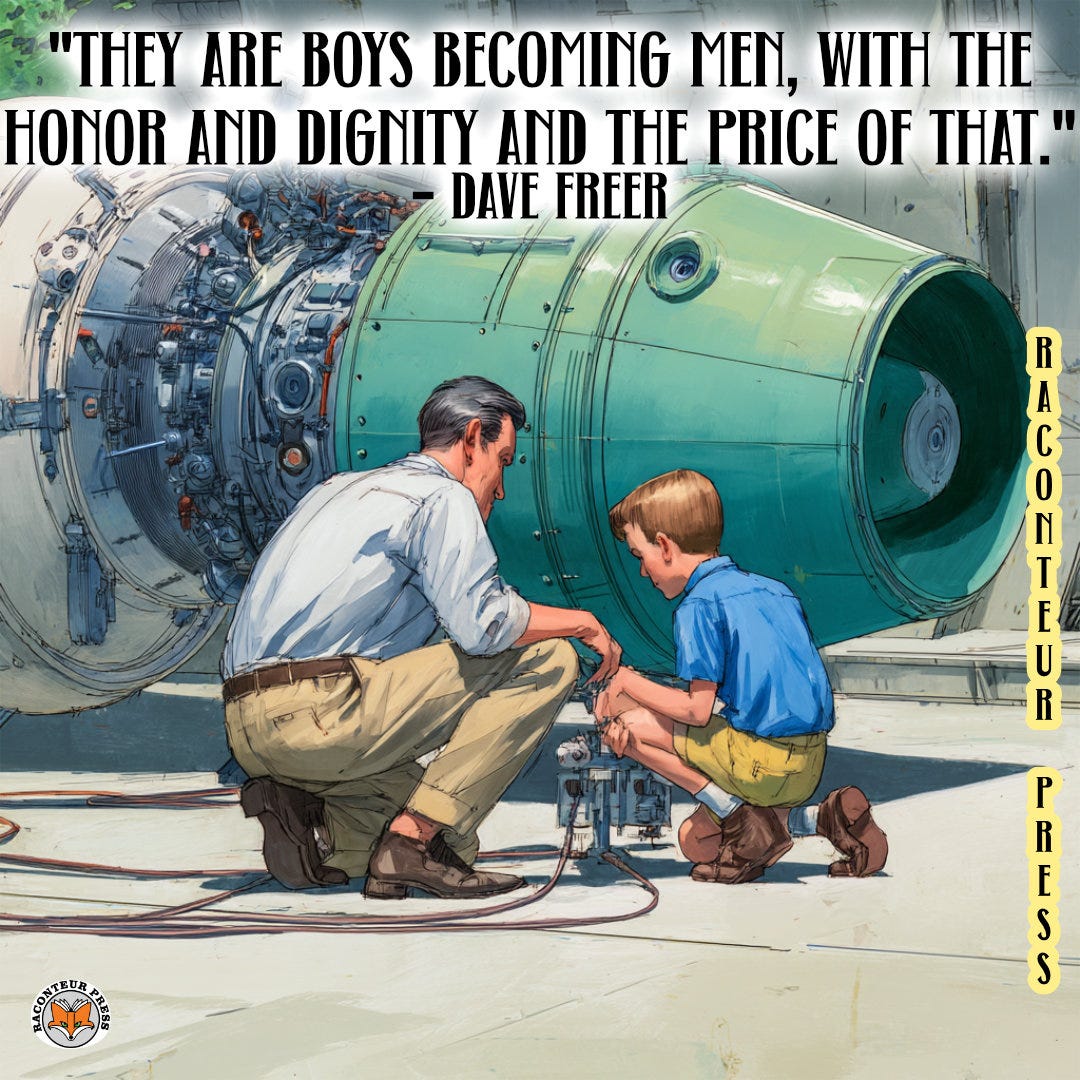
    “I wrote STORM-DRAGON at Cedar Sanderson’s suggestion — okay, sharp poke in the ribs. She said RACONTEUR wanted to start producing books to get younger boys reading, and that I ought to write one. This was probably because I have all too many traits in common with the average outdoorsy eleven-year-old boy, and had little more practice at writing than most of them. It was important to me because books have been a friend, a refuge, an inspiration, and a source of role models all my life. Part of that role model thing was helping others out (a core theme in many of the books of my childhood — which I’m sure will come to an end soon). I had a rough go of it as a little kid, and books really were what pulled me through. I want any other boy I can to have that, too: the only thing they need is books they CAN love. So, I tried to write one that I would have loved. That would have been my best book from an eight-year-old till when I grew up. As many people will tell you, I haven’t got there yet.

    “I’m a former ichthyologist (a fish scientist). My dad was ‘Mister Mate’ on a little fishing boat. I’ve been fishing and diving since I was knee-high to a grasshopper. I live on an island. I wrote about what I know and love. The science and biology all work, because as a kid I wanted them to, and I haven’t changed. And… hey, it turns out that the Prometheus judges also must include some readers who thought this was a good idea too. Maybe some of them also nurture that inner 11-year-old that enjoyed a book where I was trying to emulate a Heinlein Juvie, just a little more current.

    “I believe it is much harder to write a good Middle Grade/YA book (because the audience is very demanding, impatient, and, um intolerant of boring bits) than a novel for adults — who are more forgiving, so I’m flattered that Prometheus Judges decided it was worth finally awarding their first YA Special award to. I hope it brings Raconteur the recognition they deserve. I hope the award gets more boys to read it.

    “I think, before I get a swelled head about this, I better go and dunk it in some icy sea-water, full of bitey creatures, to bring me back down to size.

    Bests,
    Dave
    ”

    More

    First published on the Raconteur Press Substack, August 5, 2026.
  • Read a Snippet: Sons of Gold and Fire!

    Read a Snippet: Sons of Gold and Fire!

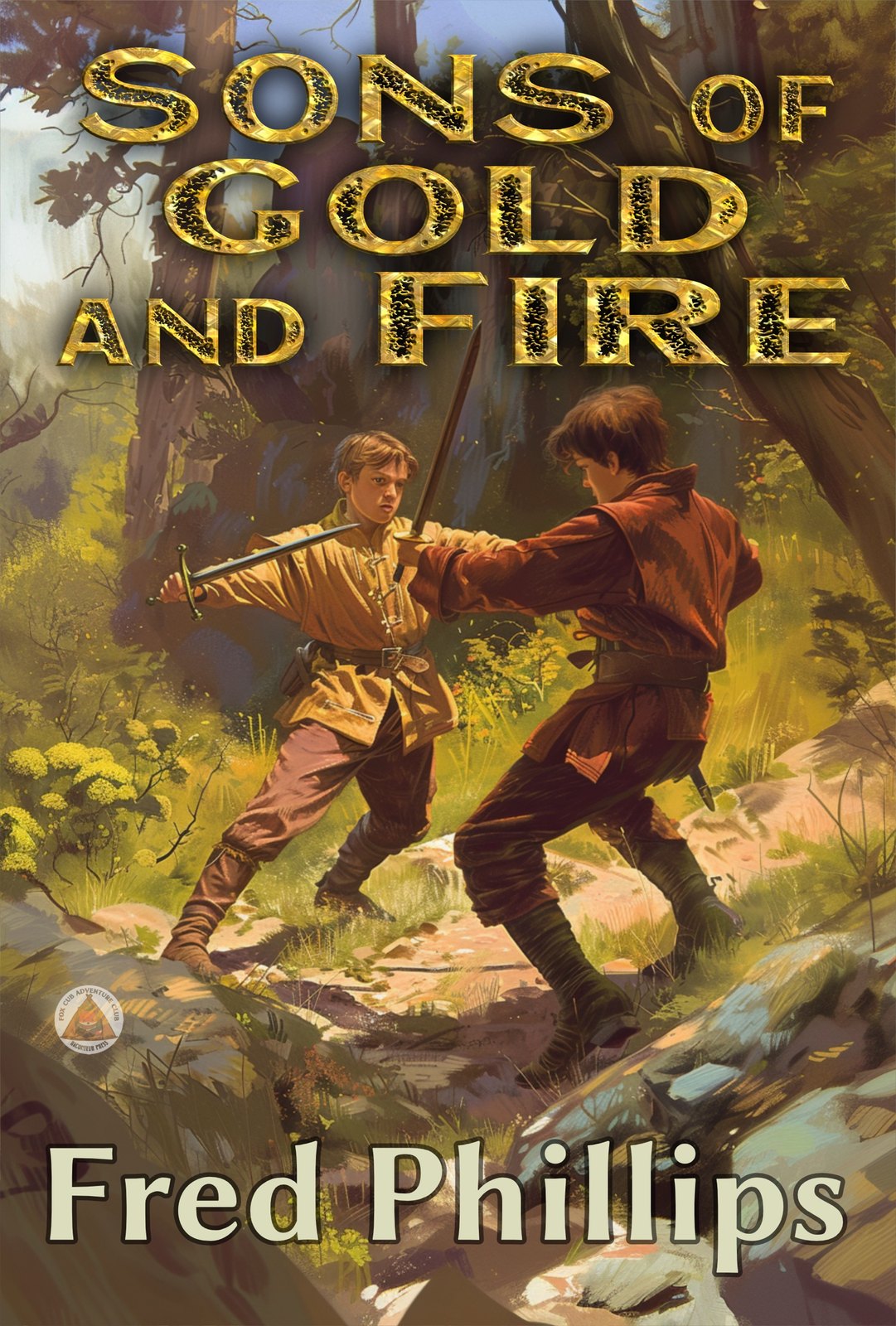
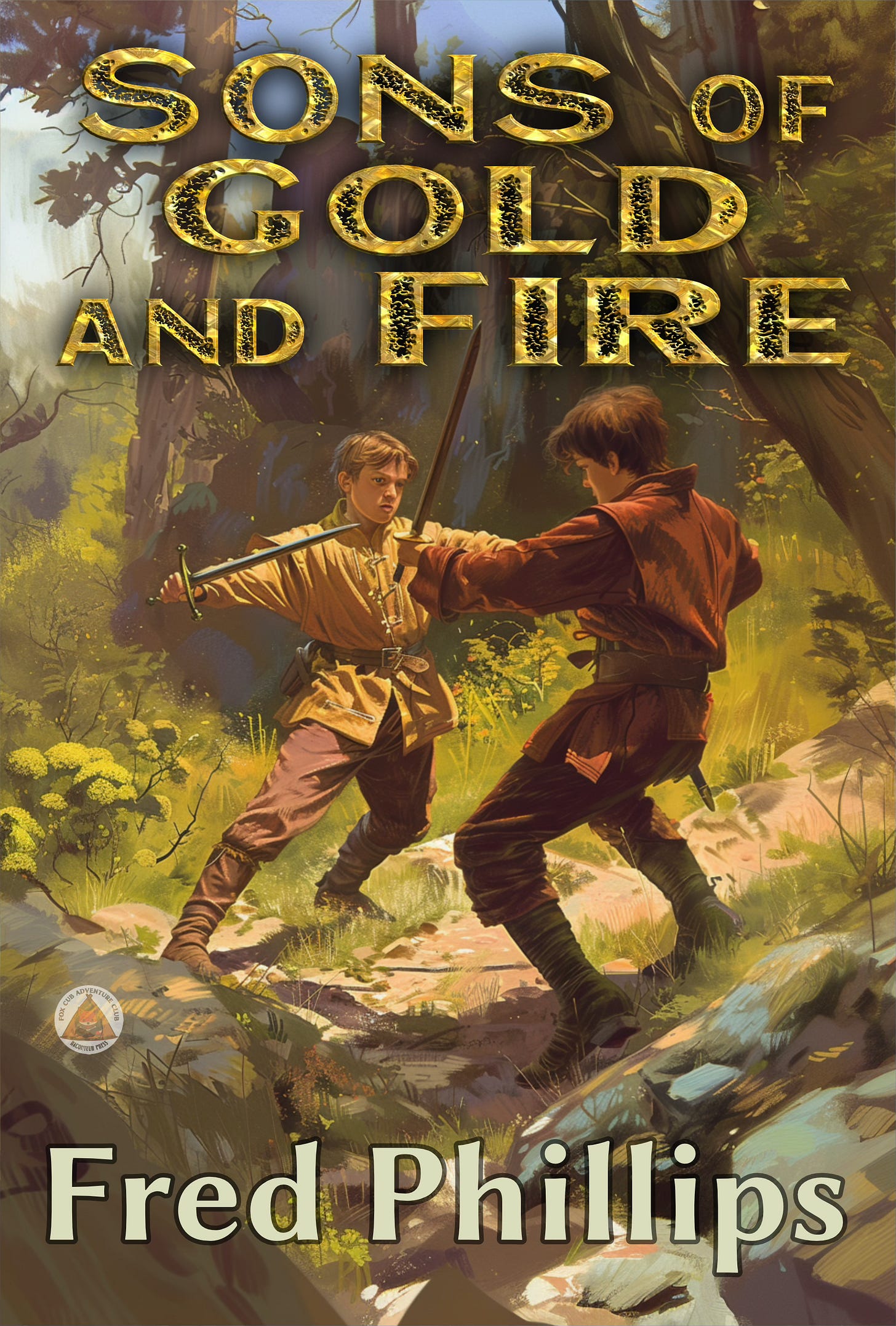
    Aron is back and learning the hard lessons of becoming a man in Book 2 of Fred Phillips’ award-winning Gold and Fire Series, Sons of Gold and Fire!

    Two years have passed since the events in Dreams of Gold and Fire, and the stakes are higher than ever:

    Aron’s little brothers are gone. His father and his knight-master never returned. And the dragon who could end this in an afternoon is locked in a wizard’s trap, held by a net no fire can burn through.

    It all comes down to Aron, a squire who can’t quite master his temper, on a mountain road he’s never walked, trying to find the one creature powerful enough to put things right.

    Available now, Sons of Gold and Fire is Phillips’ thrilling sequel your boys (and you!) won’t want to put down!

    The man took a step toward him, and Aron drew his sword, holding it in front of him in a defensive stance.

    “I don’t want to hurt you.”

    Ebbner snorted. “Fat chance of that. I know you ain’t a knight, either. I’m betting you don’t even know how to use that thing.”

    Aron sensed it just in time to twist out of the way as Oma reached from behind with a handful of the calmthorn salve she had intended to smear on his cheek. The distraction was enough to allow Ebbner to close the distance between them. Aron brought the sword up again, darting his eyes back and forth between the two of them, ready to defend against whichever came first. He wasn’t sure what to do after that. Neither Devan nor Gareth had trained him to face two attackers. He’d just have to figure it out.

    Ebbner pulled a cudgel from behind his back. It was a heavy chunk of dark wood with a large ball at the end.

    “Put the sword down, laddie, and let’s talk about this. I don’t want to have to hurt you.”

    Aron watched them both warily, trying to form a plan. He leaned slightly forward, as if he intended to place the sword on the ground, then he lunged, lashing out at the man’s club with the blade. He knocked it wide but didn’t jar it from Ebbner’s grip, as he’d hoped. The man growled and reached for Aron with his free hand. The boy twisted away, but his attacker got a handful of cloak, preventing him from escaping. Aron spun back to see the cudgel coming down toward him. He barely got the sword up to deflect it, and the impact jarred his entire body.

    Seeing the boy’s reaction, Ebbner gave him a wicked smile. “You see, I’m a lot stronger than you. Put it down, and we can pretend this never happened. Keep it up, and…”

    The man raised the club threateningly, and when he did, Aron remembered something about fighting that he hadn’t learned from Devan or Gareth. In fact, they’d both probably find it quite dishonorable. But they weren’t here, and in some situations, you had to do what you had to do. He took his older brother’s advice, turning the sword so the pommel faced Ebbner, and then he drove it with all the rage and anger inside him, as hard as he could, into the most delicate part of the man’s anatomy.

    Ebbner dropped the cudgel and let out a high-pitched whine. Aron didn’t wait to see what would happen next. He spun away and was off down the road. On his way past, he snatched up the bow from where it had fallen on the ground, and then he ran like a sabrecat was after him. He didn’t slow down for a very long time. ⚔️

    First published on the Raconteur Press Substack, May 5, 2026.
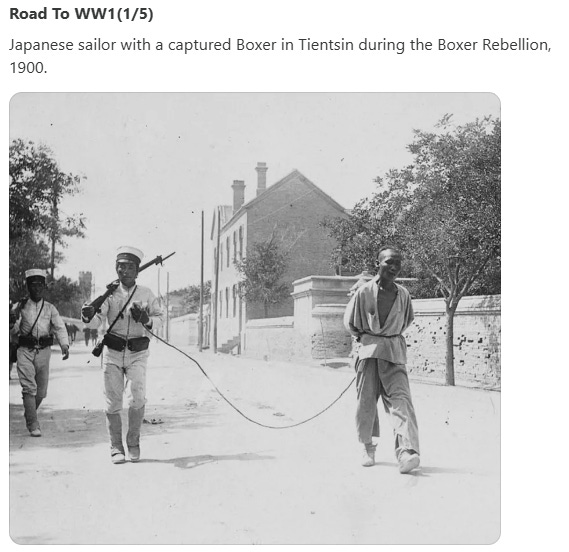
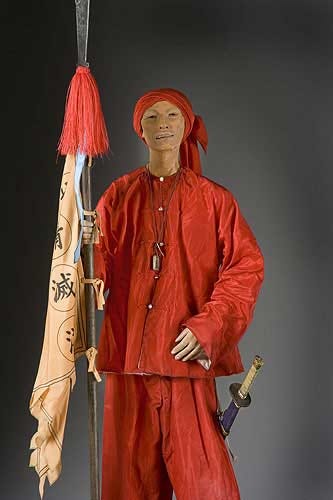
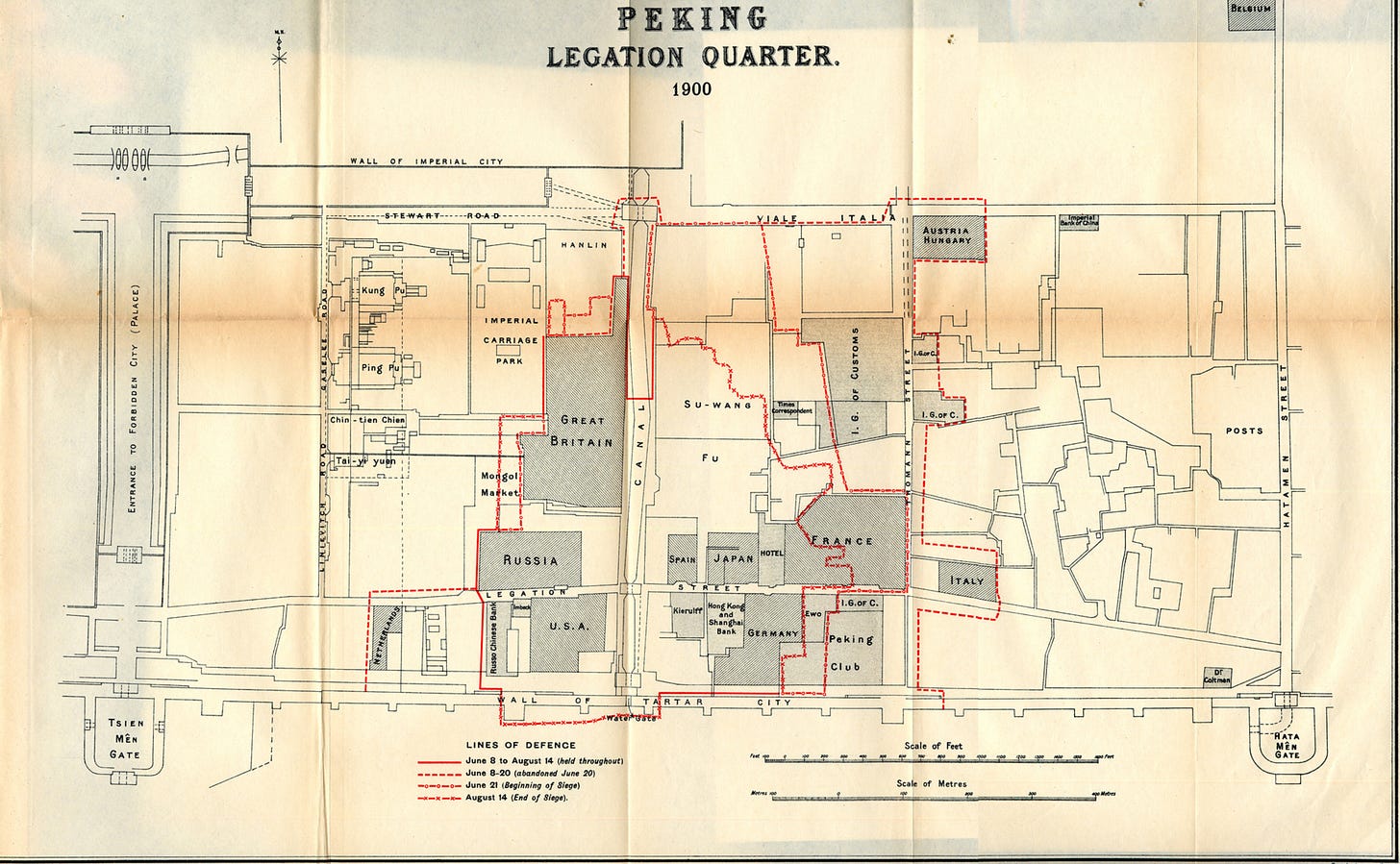
  • Adventure in the Shadow of the Tartar Walls: A Boy’s Epic Journey Through the Boxer Rebellion

    Adventure in the Shadow of the Tartar Walls: A Boy’s Epic Journey Through the Boxer Rebellion

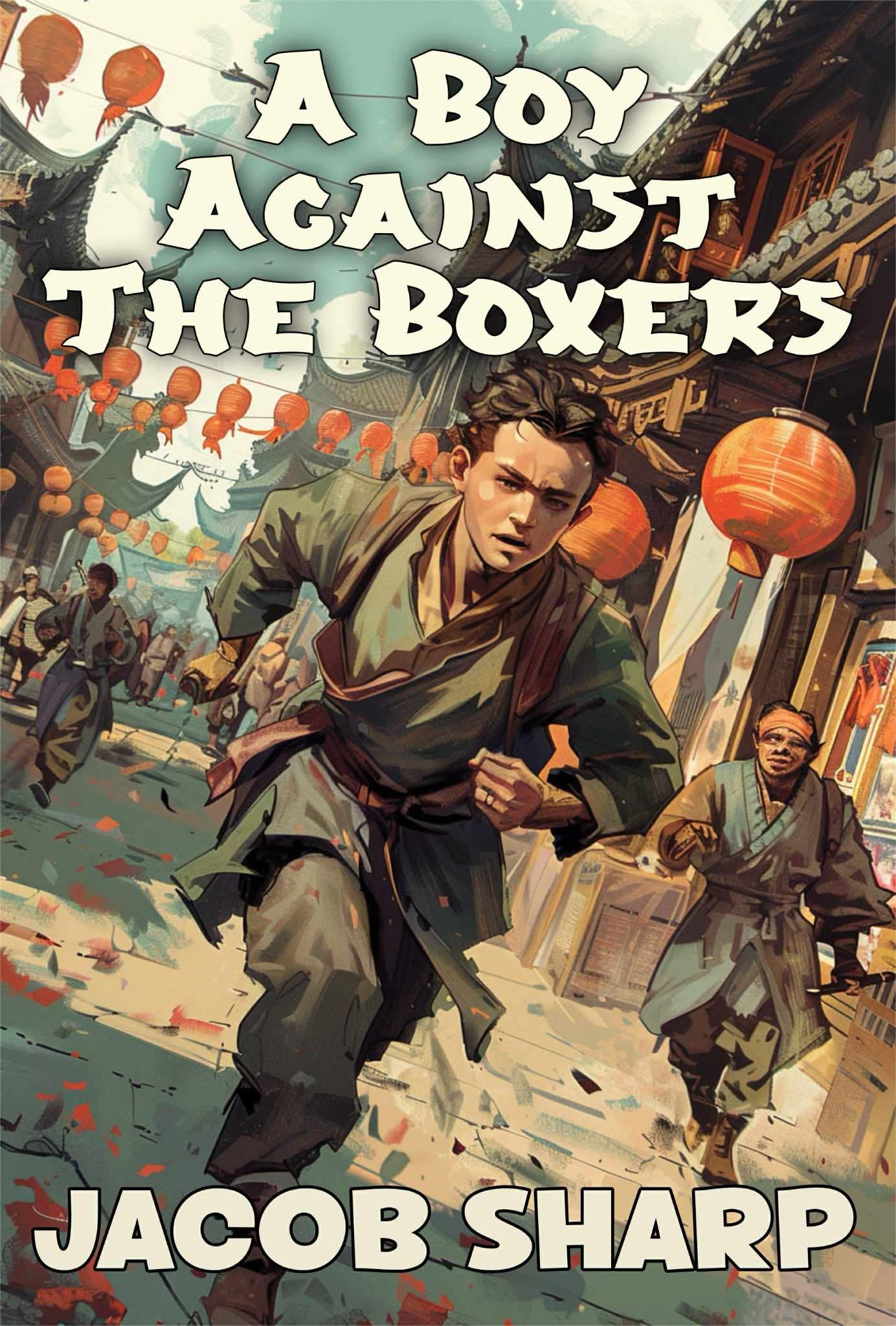
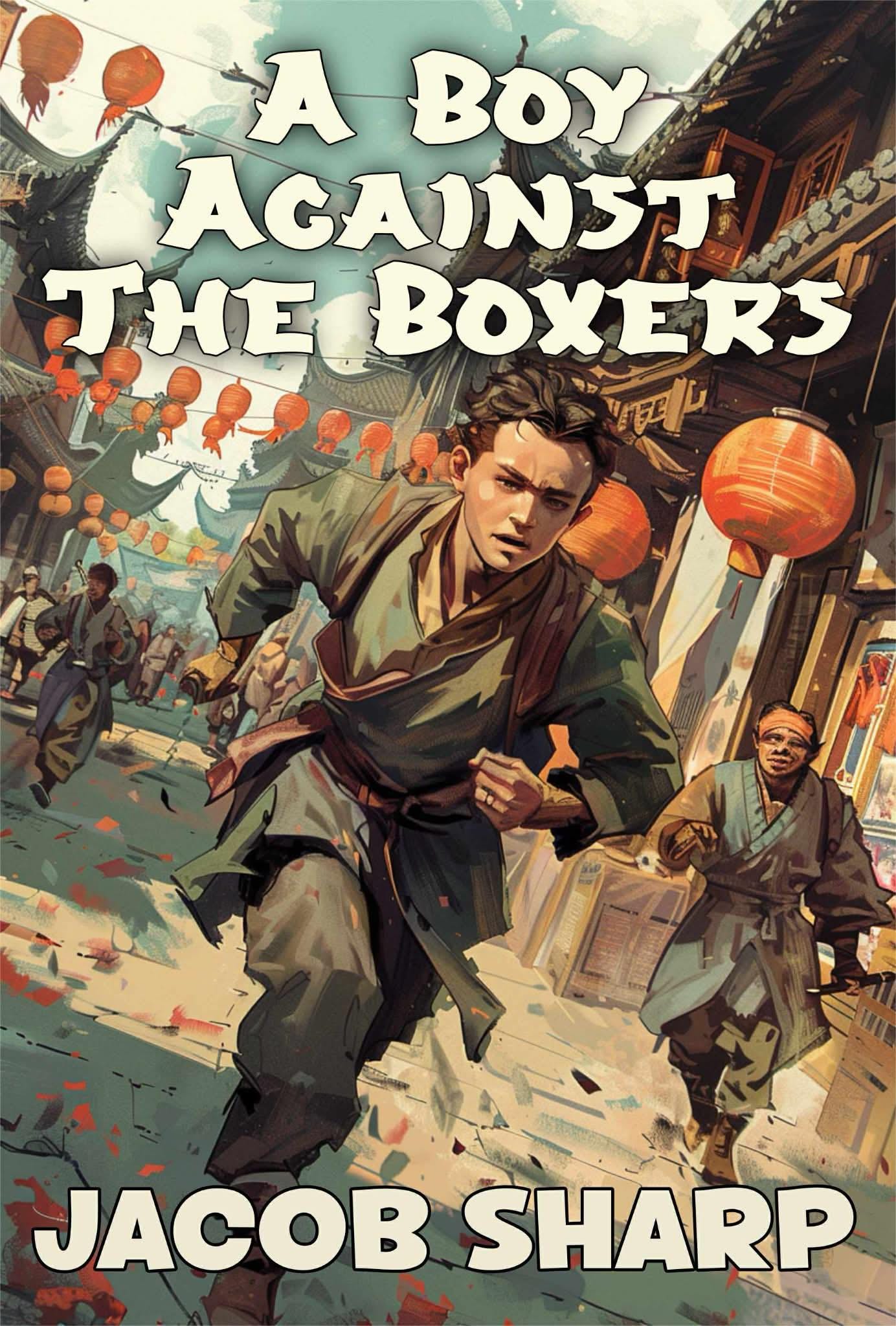
    Hey gang, it’s Editor Chris again, this time with something very special to show you—it’s our very first full-length historical fiction boys’ adventure novel, A Boy Against the Boxers.
    This is very meaningful for me, as a man, a father, a military historian (MA, Norwich University 2016), and a former boy whose favorite books growing up included The Red Badge of Courage, Ivanhoe, and Treasure Island.1

    Rising star author, US Army and law enforcement veteran Jacob Sharp takes us back to the dawn of the Twentieth Century just a few short years before the chaos and tragedy of the War to End All Wars.

    Let’s let Jake describe the book in his own words:

    “In the hot summer of Peking, China in 1900, American merchant’s son Eddie Donahue finds himself longing for adventure. Eddie, who lives in Peking’s colonial International Legation Quarter, is quickly swept up in the drama and action of the Boxer Rebellion and finds himself facing down enemies and challenges from both without and within the Legation’s high Tartar Walls.

    Based on real historical events, the reader will follow 14-year-old Eddie as he uses ingenuity, bravery, a dash of luck, and even his trusty canine companions to overcome desperate challenges and navigate his own coming of age path.”

    The “real historical events” of this story are important to me. Not just because I have degrees in the field, but because I can’t imagine not wanting to know more about the world, how things got the way they are, how we became who we are, and how our own ancestors lived and understood the world.

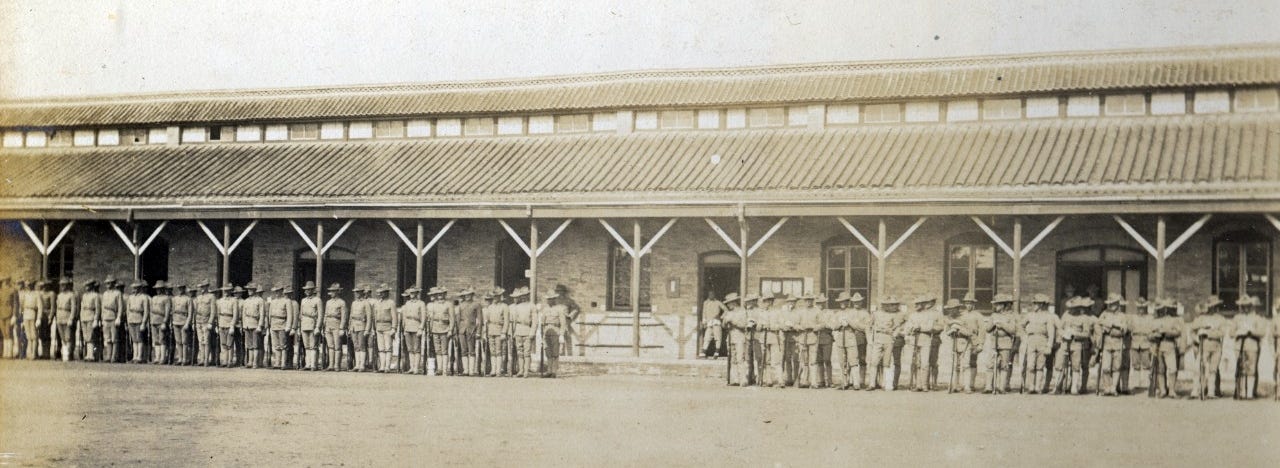
    Marine guard outside the U.S. legation at Beijing. (NHHC.)

    I think the failure to teach history is in the how, and in failure of imagination.

    For too long, we’ve somehow made real history boring, stale, and irrelevant, which to me is simply a crime. No, it should never be whitewashed, it should never be told from only one perspective, whether ours or someone else’s but it also shouldn’t be relegated to a tool of hyper-politicized “discourse” either.

    One of the words that’s captured in “history” is “story” after all.

    This story, in particular, is unique and almost forgotten today. The Boxer Rebellion is something many perhaps have vaguely heard of, once, maybe. If that. Wasn’t it somewhere in China? Didn’t it involve some crazy martial arts guys? It’s not a clean story, the movement was anti-foreigner and foreign influence, anti-imperialist, and anti-Christian, but it also came on the heels of Qing China’s humiliating defeat in the First Sino-Japanese War (1894-1895), failed attempts at military and political modernization, the creation of foreign spheres of influence and concessions, and massive social upheavals.

    The Boxer Rebellion, in many ways, was one of the final nails in the coffin of Qing China, the rule of the Manchu, the imperial state itself, and the precursor to decades of warfare: revolution in 1911, warlordism, Communist insurgency, civil war, and a second horrific war with Imperial Japan.

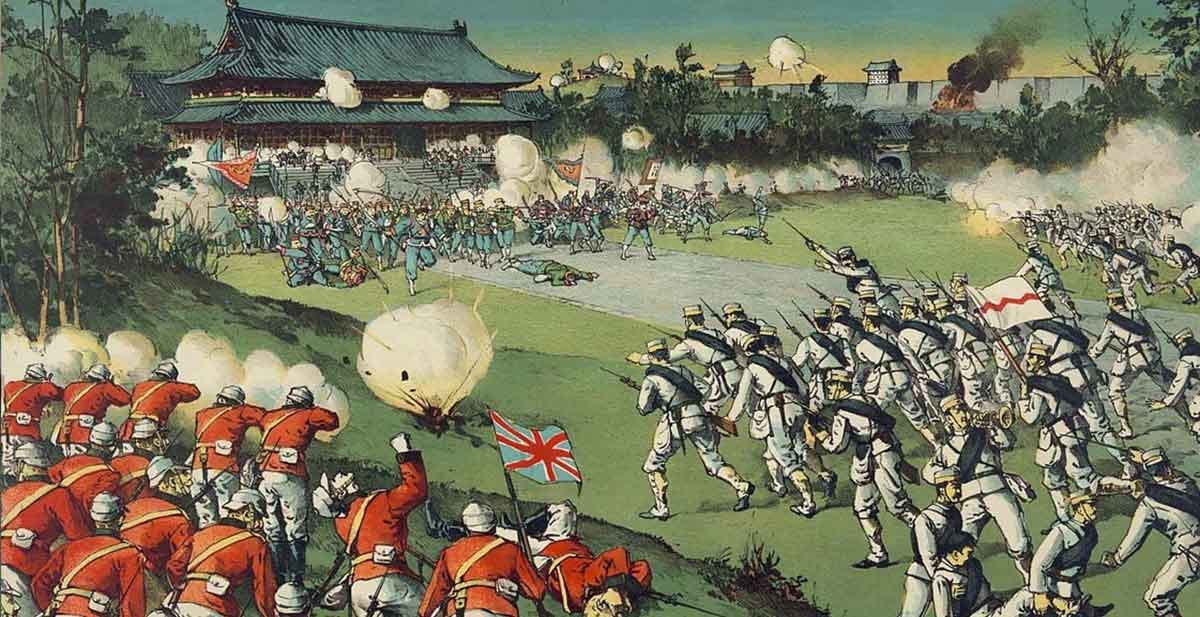
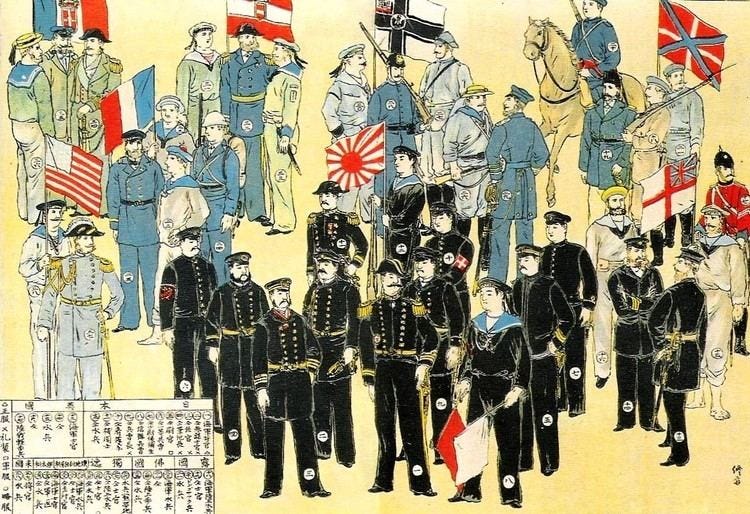
    A painting showing Western powers responding to defeat the Boxers’ siege of the Beijing international legations in the Battle of Peking, via Historic UK…

    It’s also seen as one of the US Marine Corps’ critical mythbuilding2 triumphs of the modern era, one of the many “small wars,” shaping the Corps before and after the First World War.

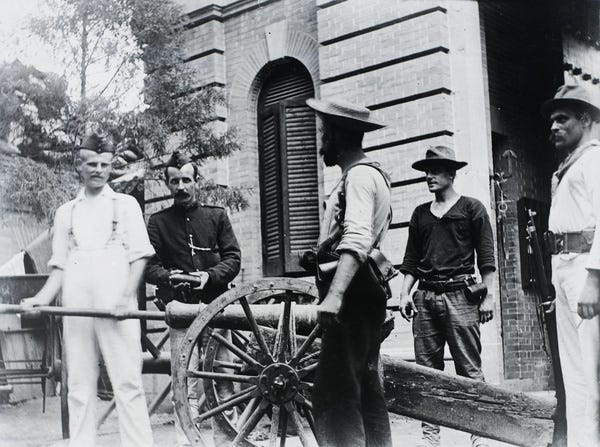
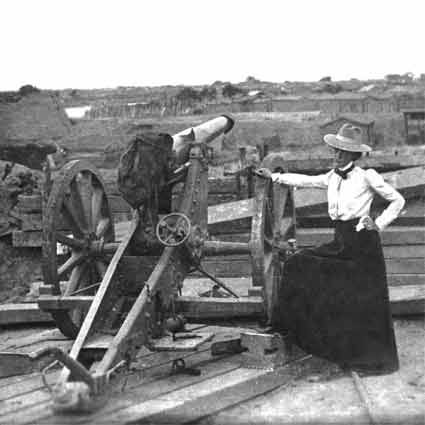
    The facts of the Siege of the International Legations are often so fantastical they’re almost unbelievable, whether talking about the “International Gun…”

    The cannon is now in storage at the US Naval Academy Museum, Annapolis, Maryland, United States. Second from the right: the American gunner Sergeant Mitchell USN, who had resourcefully mounted the old cannon muzzle on a set of wheels belonging to an Italian gun.

    …Or, the presence of a future president and first lady for the entire affair.

    Among the foreigners besieged in Tianjin during the Boxer Rebellion were Herbert and Lou Henry Hoover. Mrs. Hoover wrote to a friend, “You missed one of the opportunities of your life by not coming to China… the most interesting siege of the age.”

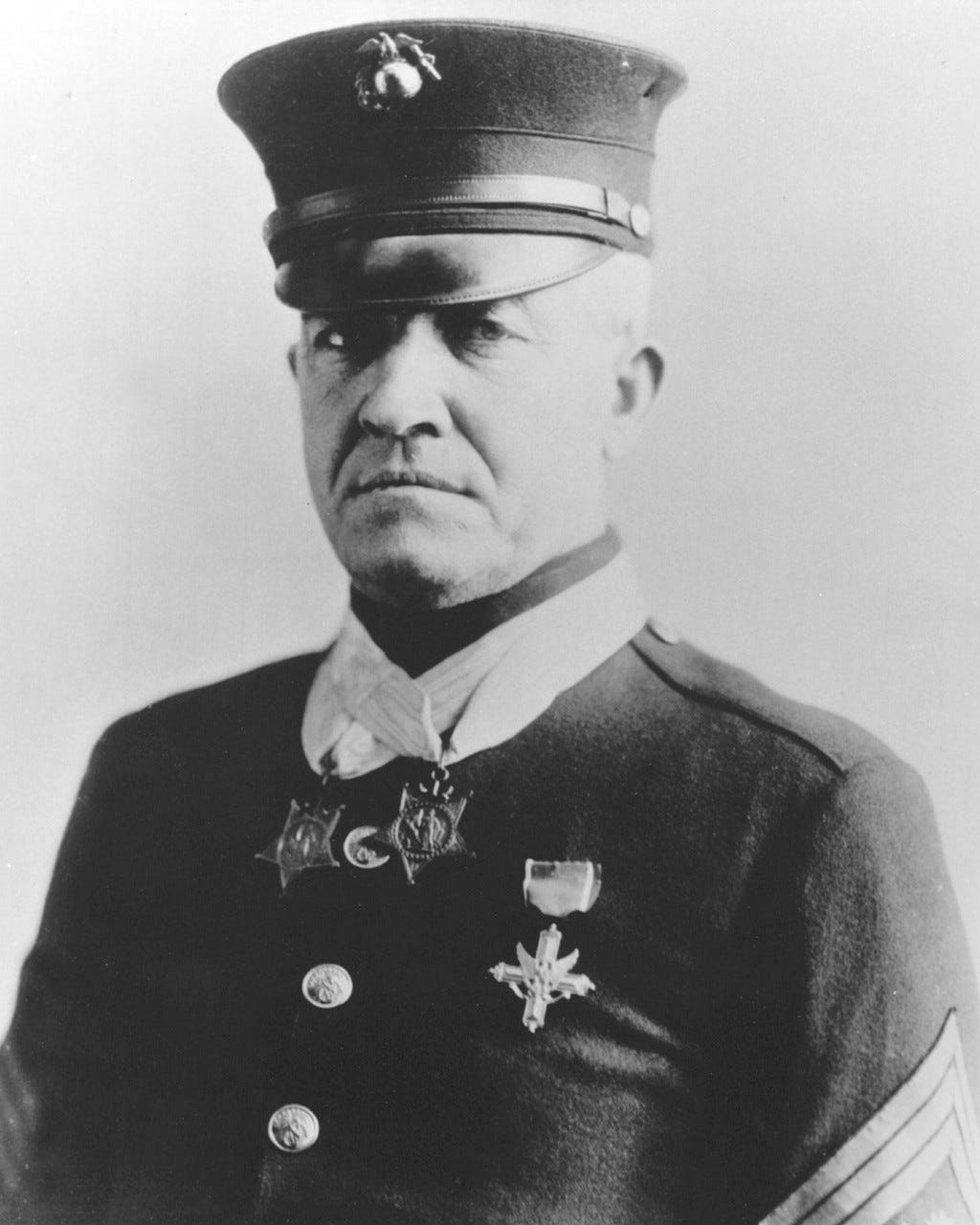
    Or the Medal of Honor awarded to Pvt. (and later Sergeant Major) Dan Daly,

    Highlight: “the only enlisted Marine to have won the Medal of Honor twice, for two separate acts of gallantry.”

    I think part of the great tragedy of this story, is that for the member-states of the Eight Nation Alliance and their citizens and soldiers defending the Legation Quarter, this is perhaps the last time they were united in a single cause, and not locked in desperate existential warfare which made the 20th Century the bloodiest in recorded history.

    These and other thoughts, written nearly 126 years after the fact, are very, very far from the mind of our main character Eddie Donahue, his parents, and those behind the siege lines in this story, but as you read this wonderful debut novel, reflect on the book. Not just as a coming of age story for boys on the cusp of manhood, but also on the shape of the world today and on all the things—good, bad, heroic, or tragic—that made the world we live in today.

    Map of the defense scheme in the legation quarter during the Boxer Rebellion. Source: Morse, Hosea Ballou, The international relations of the Chinese empire (1910), vol. 3. The period of subjection, 1894-1911.

    Some suggestions for further study:

    55 Days at Peking

    The Boxer Rebellion: The Dramatic Story of China’s War on Foreigners that Shook the World in the Summer of 1900 by Diana Preston

    Keep Up the Fire (second edition, Worthington Publishing)

    1

    Very much a side-note here, but Disney’s Treasure Planet has one of my absolute favorite versions of Long John Silver in any version of the story.

    2

    Don’t kid yourself, they’re a cult.

    First published on the Raconteur Press Substack, February 3, 2026.

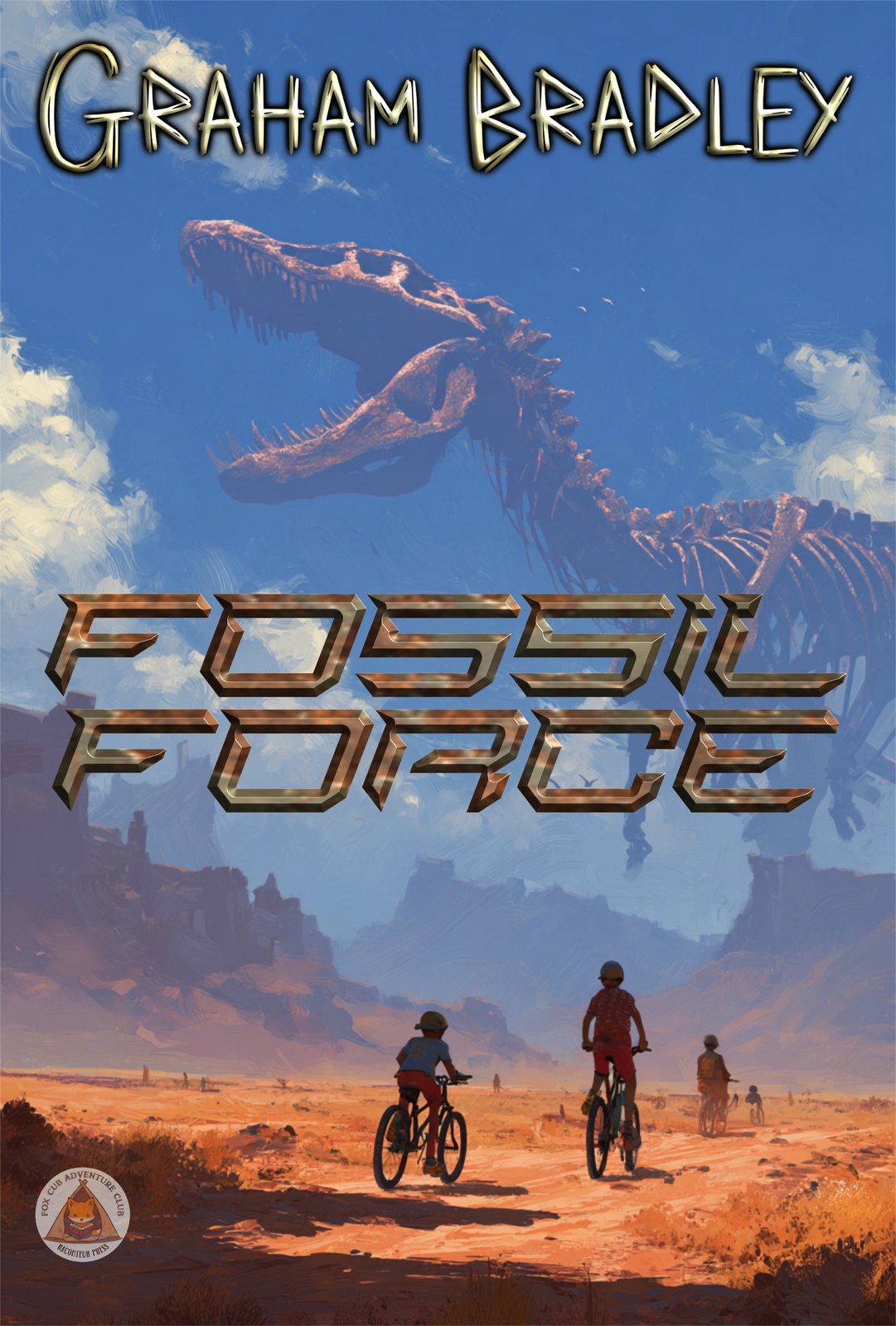
  • Why Boys Need Epic Quests Like Graham Bradley’s Fossil Force

    Why Boys Need Epic Quests Like Graham Bradley’s Fossil Force

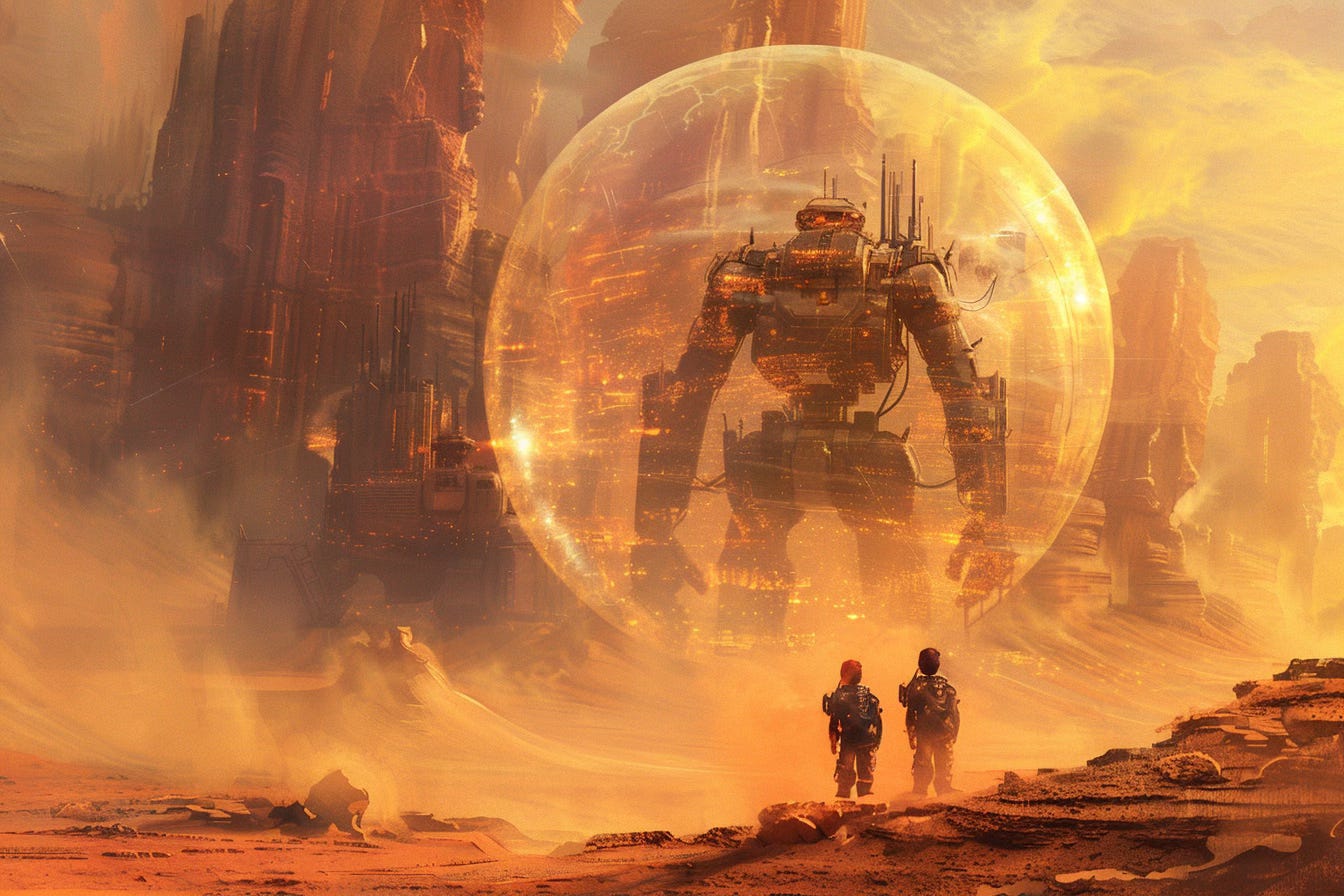
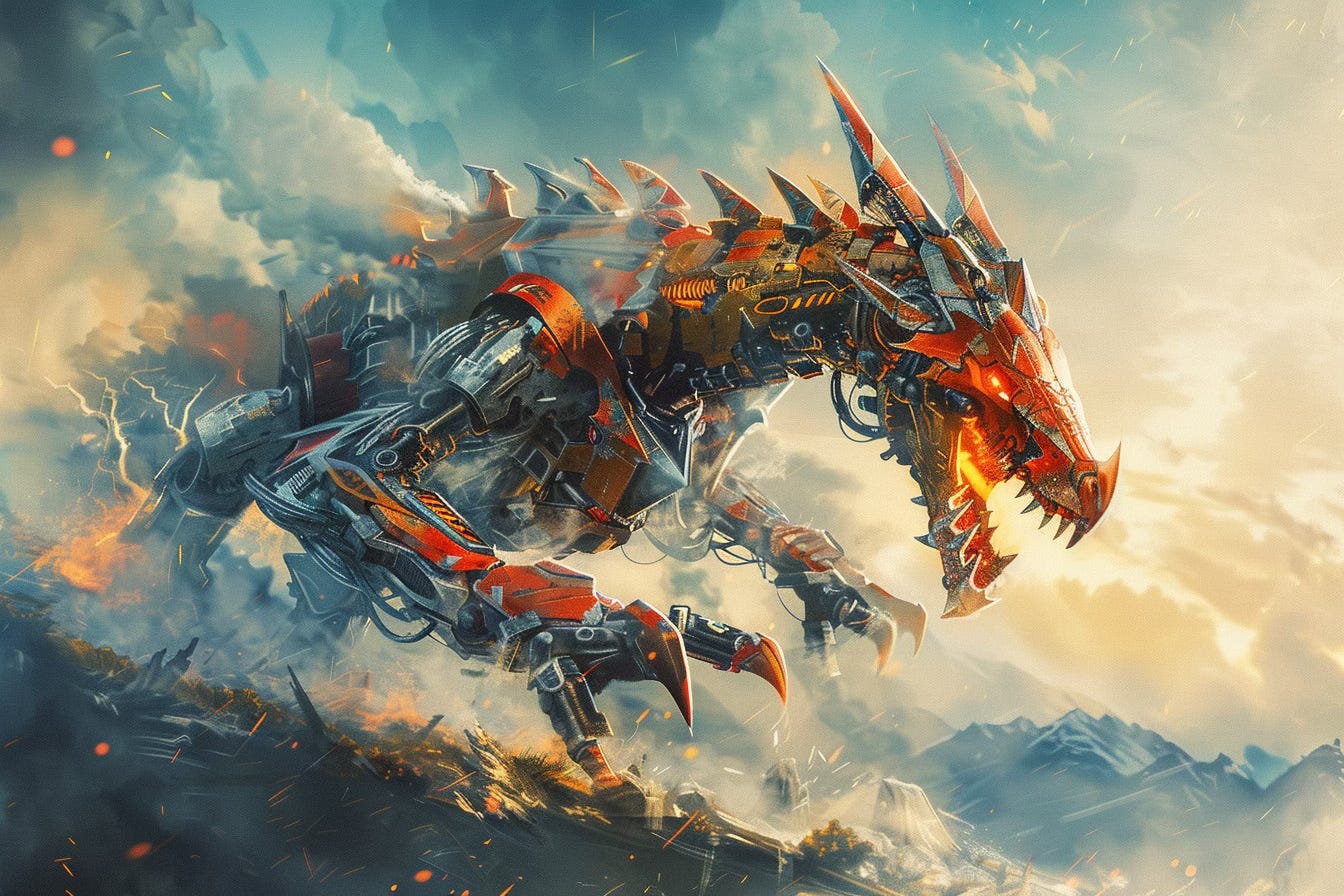
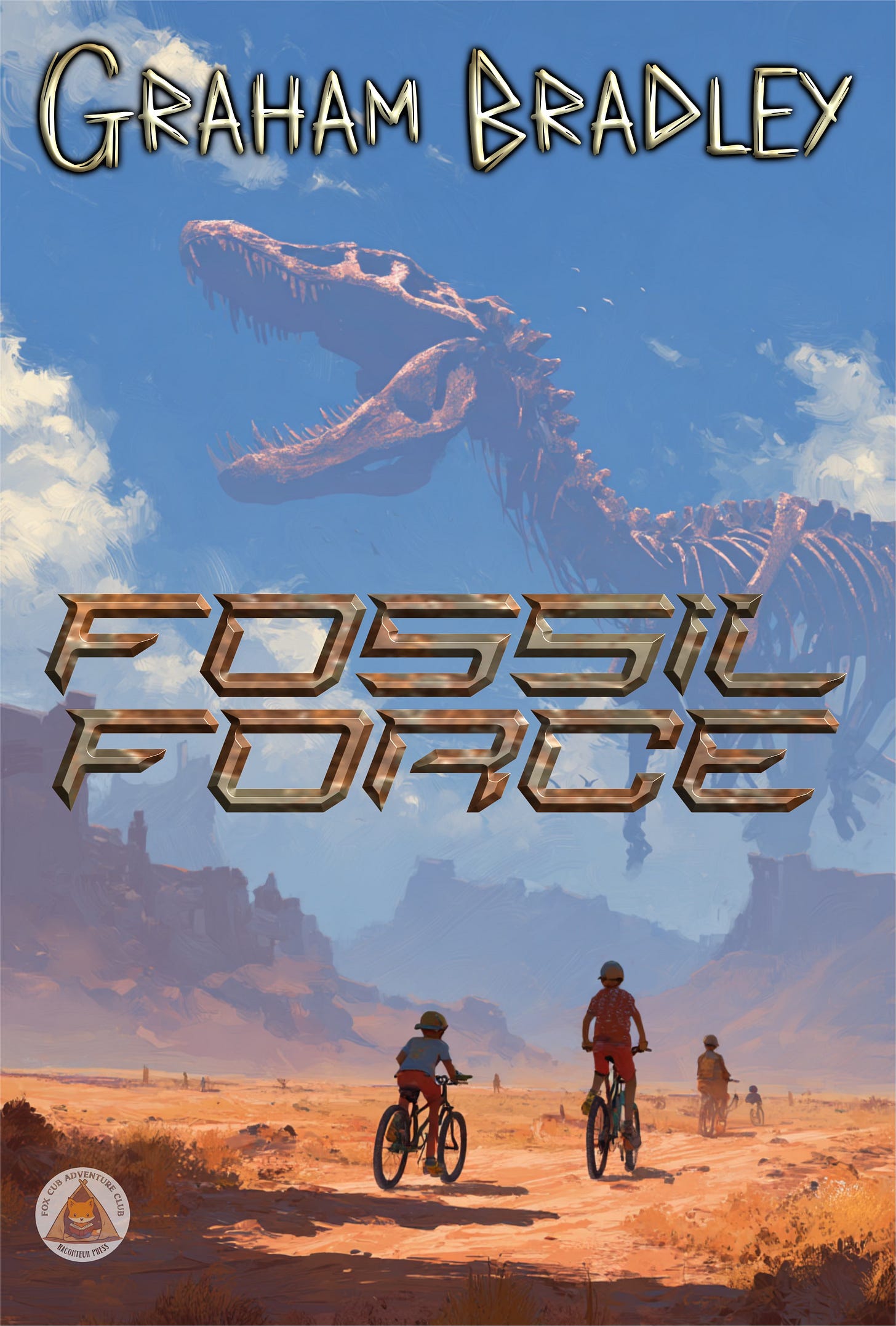
    Imagine a kid like Patrick Keller: uprooted to a scorching Utah ranch, wrestling with his family’s collapse after Dad’s crippling accident. In Graham Bradley’s Fossil Force, this 12-year-old stumbles onto a relic mask that summons Digo, a colossal mech suit juiced by prehistoric fossils. With a ragtag group of buddies, he clashes against subterranean escapees plotting to breach “deep-gates” to hidden realms. Amid a drought of gripping narratives, Bradley Fossil Force tells a tale of toughness, intrigue, and principled masculinity against today’s sedentary haze.

    Resilience stands as the bedrock of Fossil Force’s appeal. Patrick’s shift from city ease to desert grit echoes the upheavals boys often endure, from family crises to self-doubt. Piloting Digo forces him to rise to newfound challenges from underground threats to botched vandalism that triggers the suit’s ethical lockout. It’s a raw lesson in accountability:

    “Some people are only good because they don’t have the power to do something really bad. I never did, until I had you.”

    Bradley layers in personal stakes—like a “fallen” uncle revealed alive belowground—showing boys that endurance sprouts from facing flaws head-on. Far from endless swipes on devices, these sagas arm readers with tools to weather storms, turning setbacks into stepping stones.

    Curiosity gets a turbo boost with Bradley’s STEM integration. Fossils morph from museum dust to dynamic power-ups, “printing” Sentinel upgrades for blistering speed or impenetrable defense. The gang’s garage tinkering blends mechanics with local dino lore!

    Throughout our tale, Tyler’s fix-it wisdom shines: “The frame’s good but these aftermarket parts are cheap. Feels like straight-up iron.”

    Fossil Force depicts hands-on fascination with science, history, and innovation—an antidote to passive info dumps, urging boys to probe, build, and unearth truths in a query-everything era.

    At heart, Bradley’s tale models sound masculinity: vigilant, united, and upright. Patrick’s “Fossil Force” crew prioritizes collective smarts over solo bravado, tackling abductions and brawls with compassion and code. Digo’s firm prod—“Prove me right”—demands decency, dodging clichés while honoring guardianship of kin and comrades.

    Fossil Force excavates the adventure boys hunger for: quests that mold everyday lads into legends. Unearth it on Amazon for fossil-fanatic explorers ages 8-14.

    Join our Substack for fresh digs into boys’ adventure revivals!


    First published on the Raconteur Press Substack, January 27, 2026.

  • The Inspiration Behind “Fossil Force”

    The Inspiration Behind “Fossil Force”

    How did you come up with the concept behind your setting?

    Whether it’s a sci-fi book about aliens or a weird archaeology book about lost civilizations, I’ve often daydreamed about making contact with a highly advanced race. Let’s say their technology is way ahead of ours and they gave us some extremely powerful machines to use, with strict rules. If we tried to use them for evil, they’d stop working. What kind of things would qualify as good or evil and why? And could a kid be trusted with that kind of power?

    When did you first come up with the idea behind Fossil Force?

    About five or six years ago, when I was working at a uranium mine in Blanding, Utah, and I met some guys from the Navajo nation who oversaw the site. I thought “Well, they’ve been around for a long time, what if their ancestors were connected to this legend?” Now, granted, the Navajo/Dinae people have their own history and culture, so I made up a fictional tribe so as not to step on anyone’s toes, but that got me started.

    Where is the series heading?

    Quite simply: deep underground. And if it does well, they might even take a few wrong turns and end up in Greenland. It depends on how much the readers want.

    What element of the story are you particularly proud of?

    At the core of it all, I think the most important element is the friendship between Patrick, Steve, Tyler, and Howie. They have this huge responsibility with the Sentinels and while they have fun with it, they also hold each other accountable even without adults looking over their shoulder the whole time. I think that’s the best part of Fossil Force.

    Who inspires you?

    Easiest answer is my kids. Before this I had never read my own books to them but I wanted to reach their age group, so I tried this out and my boys went nuts over it. For weeks after we read it my oldest son would randomly ask me about parts of the story, or tell me his favorite scene. He reminds me of how much I loved to read at his age.

    Get in on some Fossil Force action this Christmas!

    First published on the Raconteur Press Substack, December 4, 2025.

  • Set Sail with Stanley Wheeler: The Mind Behind Accidental Pirates

    Set Sail with Stanley Wheeler: The Mind Behind Accidental Pirates

    Ahoy there, mateys! It’s time for even more pirate goodness! We’re very happy to introduce you to a right fine scalawag and our newest member of the boys book crew, Stanley Wheeler!

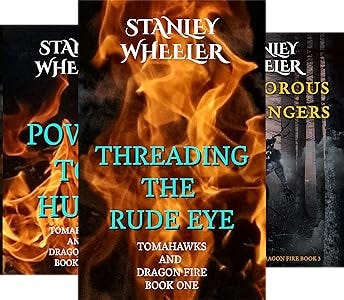
    A prolific author, Stanley has written nearly a dozen novels (including the Tomahawks and Dragon Fire series and the Justice series) and as many short stories.

    Accidental Pirates is Stanley’s newest boys’ adventure book for Raconteur Press. This time-travel tale of pirates, dragons, and cannibals was a #1 New Release on Amazon!

    Stanley Wheeler’s writing positions have been many and varied—but he prefers the sitting position. He writes and lives in Idaho, the setting for some of his books. The American West, adventure, mystery, fantasy, and the vast canvas of history provide his inspiration.

    He finds a strange pleasure in a well-turned phrase, but doesn’t usually remember such phrases long enough to get them written down; occasionally, they do turn up in his writing. Alexandre Dumas, Edgar Rice Burroughs, Brandon Sanderson, Edgar Allan Poe, Alan Dean Foster, Tony Hillerman, Louis L’Amour, Raymond Chandler, Dashiell Hammett, Mark Twain, Tolkien, and Shakespeare are among his favorite authors.

    So tell us – what’s Stanley Wheeler like?

    I could describe myself in very favorable terms, but there’s always someone ready with a second opinion.

    Always true! Let’s start simple: where did you grow up?

    Born and raised in Idaho, I’ve climbed the pyramids of Mexico, rambled about the halls and grounds of Versailles, and mourned the honored dead at Normandy. I grew up on a farm and often created adventure stories in my head while I worked. I also spent a lot of time with my grandpa, who always had a story from his boyhood to share.

    You didn’t stay on the farm, though.

    In my youth I discovered that I didn’t want a long-term relationship with crops and cows, so I sought education that would take me abroad. Eventually I graduated with a degree in Near Eastern Studies and had an opportunity to work in Washington D.C. I passed on the chance and went into law instead. In a life built on one bad decision after another, I thought I should cap that pyramid by sharing my writing affliction with the public.

    What drew you into writing?

    Although writing has been a long-term affliction for me, I didn’t start publishing until 2012 when I published a western novel I had written ten years earlier. I now have about a dozen novels and even more published short stories available. I’ve enjoyed acting in the community theater and in old time radio show plays. Writing novels surpasses the stage experience because I get to play all the characters—and I don’t have to memorize the lines. However, the kissing scenes are less satisfying.

    How did you come up with the concept behind Accidental Pirates?

    There was a call to write an adventure book for boys. I like adventure and I was a boy. I drew on my own youth and the stories I remembered, and used my grandsons for inspiration. It’s really a story for them.

    When did you first come up with the idea behind your story?

    I sat down to write and the ideas came. I did ask my grandsons if they preferred space pirates or sea pirates and whether they preferred humans or animals as characters. They chose human sea pirates and that’s what I wrote.

    Where is the series going to go?

    Chris and Kenny should have more adventures. I can see them returning to the Dragon Sea, as well as other exciting times and places.

    What element of the story are you particularly proud of?

    I like the relationship between the boys and how they face their insecurities, progressing gradually from scared, naïve boys to face danger and use their new skills to prevail in terrible circumstances.

    Who inspires you?

    My parents and grandparents and my children and grandchildren inspire me with how they face the frequently-trying circumstances of their individual lives, facing hardship and heartbreak to rise above the challenges and become better for it. Adventure stories are reflections on real life in many ways. Often, how we face the problem is more important than the ultimate resolution.

    Pre-order Accidental Pirates today! If you would like to keep up to date with Stanley’s projects and travels, you can follow him on his website and his blog.

    First published on the Raconteur Press Substack, November 21, 2025.